

Top rated
Inflatable Boat Covers: Complete Buying & Fit Guide
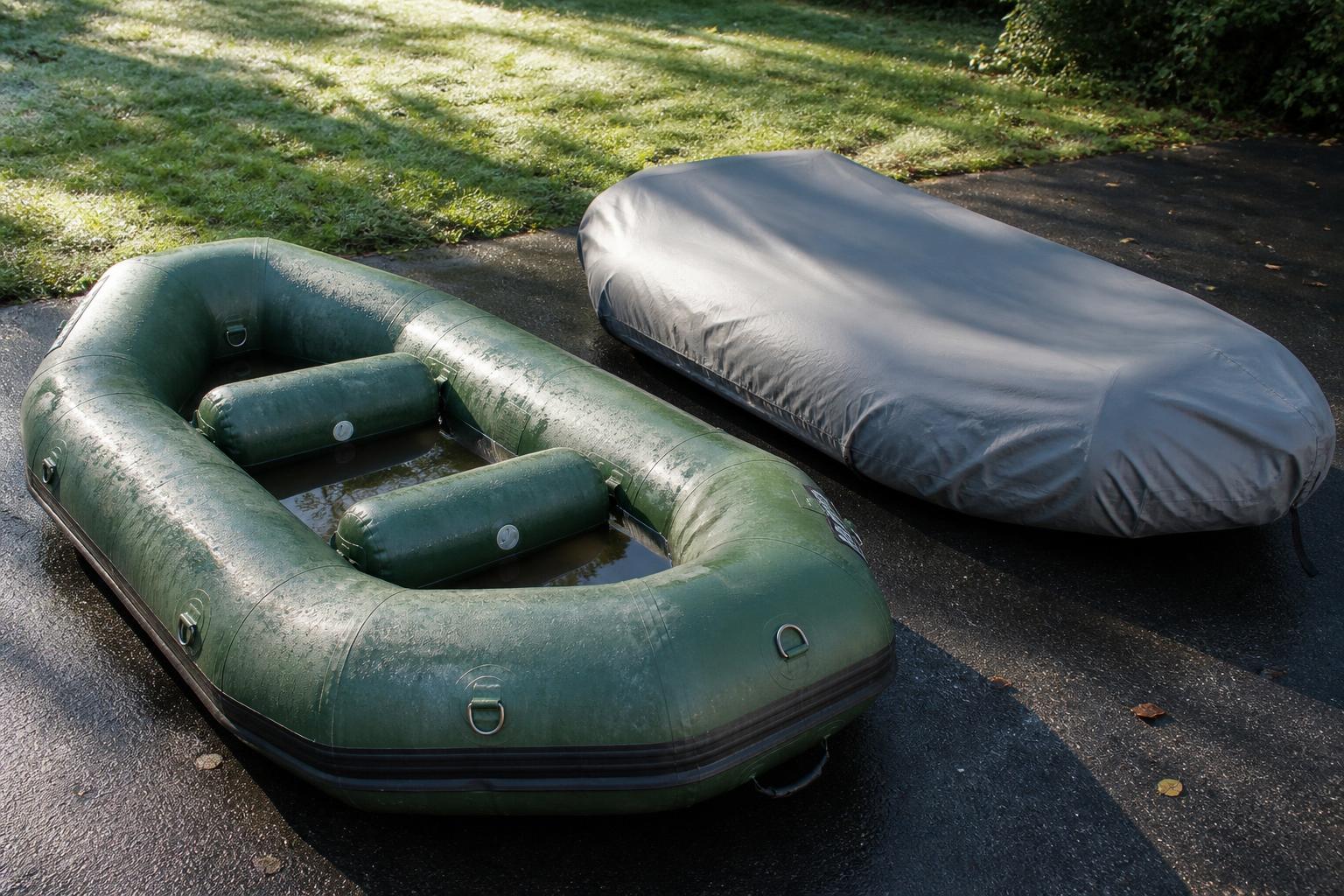
If you've ever pulled your raft or inflatable boat out of storage only to find sun-bleached tubes, a layer of mildew, or a family of spiders living in the floorboards, you already know why a good cover matters. Inflatable boats are tough, but the PVC and Hypalon fabrics they're made from still take a beating from UV rays, tree sap, bird droppings, and standing water. A properly fitted cover is cheap insurance against all of it.
This guide walks through how to pick the right size, material, and style of cover for your inflatable boat, whether you're protecting a small river raft, a RIB, or a larger inflatable catamaran.
Why Inflatable Boats Need Covers More Than Hardshell Boats
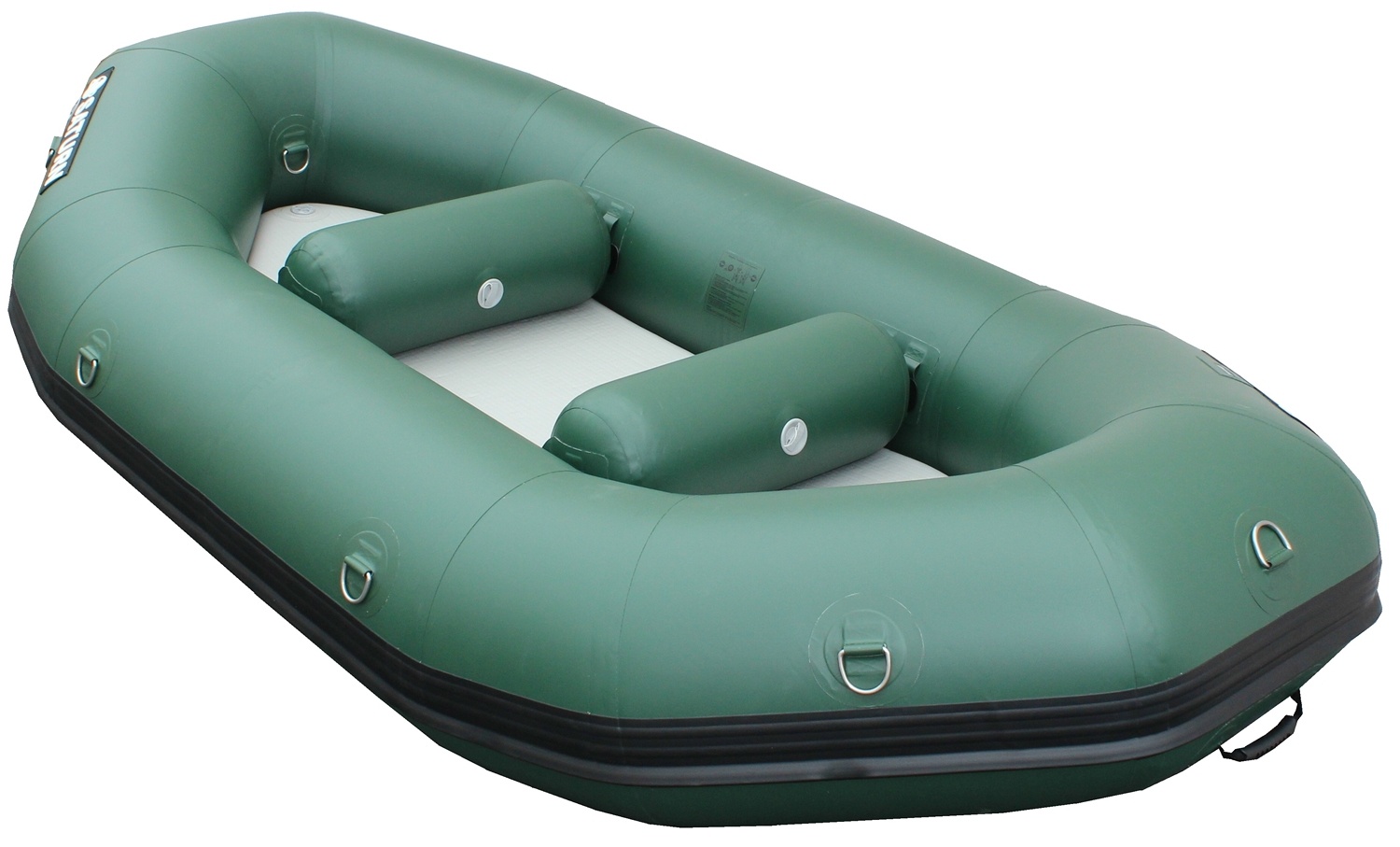
Rigid fiberglass or aluminum hulls shrug off sun exposure for years. Inflatable fabrics don't get that luxury. PVC and Hypalon tubes are essentially coated fabric, and constant UV exposure breaks down the coating over time, leading to brittleness, discoloration, and eventually leaks at the seams. Heat-welded seams (like those used on the Saturn RD290 river raft) are durable, but they're not immune to years of sun baking.
Water pooling in an uncovered raft's floor is another common problem. Even self-bailing designs can collect rain or morning dew in low spots, and sitting water encourages mold and mildew, especially on air deck floors with any fabric seams or valves.
Measuring Your Boat for a Proper Fit
The single biggest mistake buyers make is guessing at size instead of measuring. A cover that's too loose will flap in the wind, collect water in the slack fabric, and chafe against the tubes. A cover that's too tight won't go on at all, or it'll stress the seams trying to stretch over the boat.
What to Measure
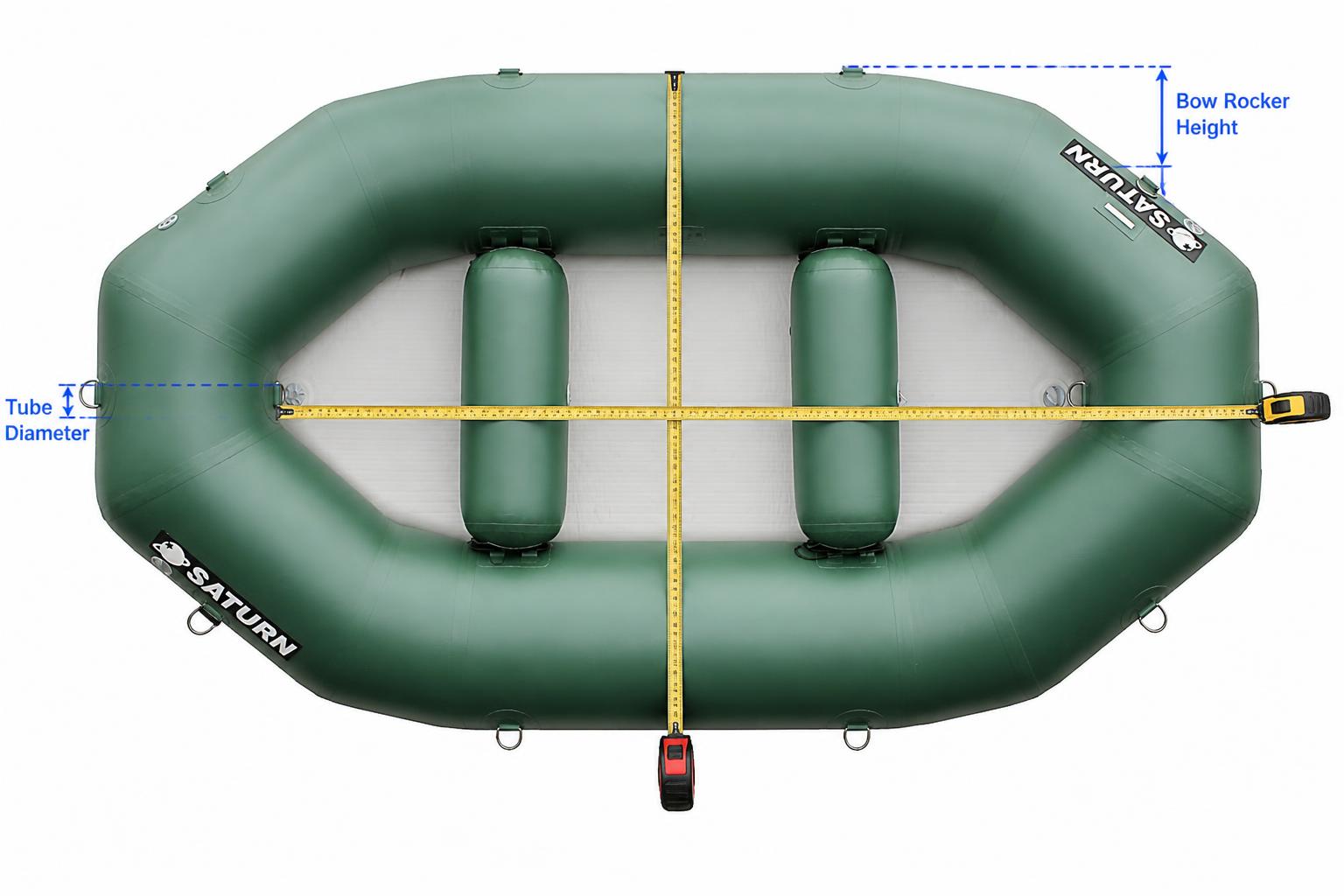
- Overall length - bow to stern, including any motor mount or rub strake that sticks out.
- Overall beam (width) - at the widest point, which is usually the tube diameter at midship.
- Tube diameter - this affects how much "rise" the cover needs to clear the tubes without pulling taut.
- Accessories - oarlocks, thwarts, motor brackets, or raised bow rocker can all change the real footprint of the boat.
As an example, the Saturn RD290 measures 9.6 feet long and 5'3" wide with a 17-inch tube diameter and a noticeably higher rocker at the bow for whitewater performance. A cover for a boat like this needs extra clearance at the bow where the rocker lifts the tube, and a snug fit around the stern where the profile is lower. If you order a generic flat cover sized only off the length and width numbers, it may not account for that rocker and will bunch up or pull away from the hull at the high point.
A Simple Measuring Routine
- Inflate the boat fully to its normal operating pressure - a soft or underinflated boat measures smaller than it will be in regular use.
- Measure length along the centerline, not along the curve of the tube.
- Measure beam at the widest point, tube to tube.
- Note the height of any installed hardware (transom, motor mount, thwarts) that the cover needs to clear.
- Write these numbers down and compare them to the manufacturer's size chart rather than picking the closest "model name" match.
Material Matters: What Covers Are Made Of
Just like the boat itself, the cover's fabric determines how well it holds up outdoors. Here's a rundown of what's commonly used and where each one makes sense.
| Material | UV Resistance | Waterproofing | Breathability | Best For |
|---|---|---|---|---|
| Polyester with PU/PVC coating | Good | Very good | Low-moderate | Long-term outdoor storage, trailered boats |
| Solution-dyed acrylic (e.g. Sunbrella-type) | Excellent | Moderate (water-resistant, not fully waterproof) | Good | Boats stored under a carport or partial shade |
| Vinyl/PVC tarp fabric | Moderate | Excellent | Poor (traps moisture) | Short-term storage, transport covers |
| Heavy-duty ripstop nylon | Moderate | Good with coating | Moderate | Lightweight travel covers, frequent on/off use |
For a raft that lives outdoors between river trips, a coated polyester cover is usually the best balance: it sheds rain, resists UV degradation for several seasons, and is tough enough to handle being pulled on and off a rolled or partially inflated hull. Pure vinyl tarps are cheaper but trap condensation underneath, which can actually promote mildew on the tube fabric and floor material - not ideal for a boat with a 140mm air deck floor like the RD290, since moisture can work into the floor seams over time.
Fit Styles: Fitted vs. Universal vs. Travel Covers
Fitted Covers
Built to the exact dimensions of a specific model, fitted covers hug the tubes and have cutouts for oarlocks, D-rings, or motor mounts. They look cleaner, shed water better because there's less loose fabric, and they hold up longer because wind can't flap them against the hull. The tradeoff is cost and the fact that they only work for that one boat model or size range.
Universal/Adjustable Covers
These use drawstrings, bungee hems, or straps to cinch down around different boat sizes. They're more forgiving if you're not sure of exact measurements, and they work across multiple boats if you own more than one inflatable. The downside is a looser fit that can flap in wind and let water pool in the slack.
Travel/Storage Covers
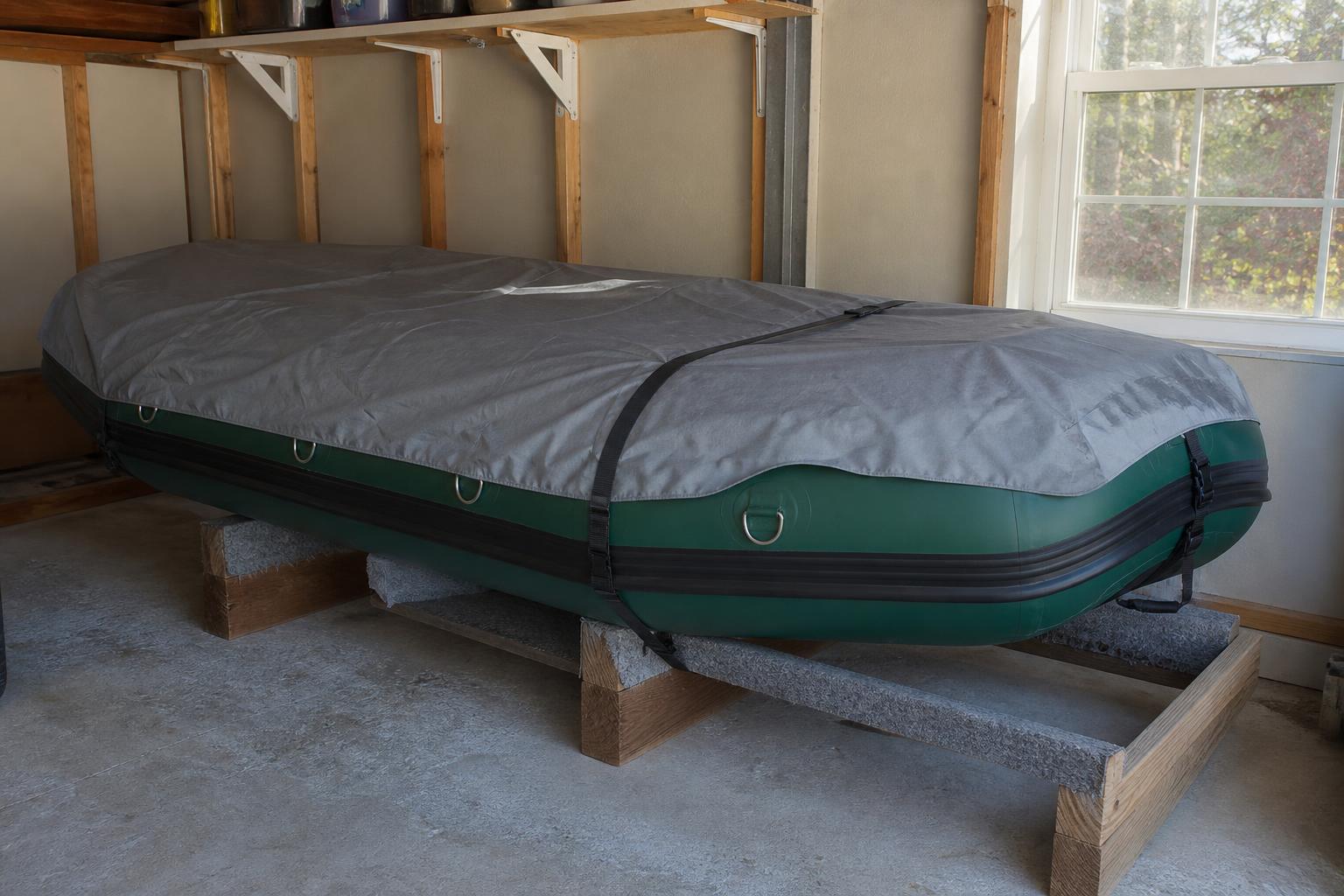
These are meant for a boat that's rolled up or partially deflated for transport, not a fully inflated boat sitting on a trailer. If you're storing your raft between trips in a garage, a form-fitted cover for the inflated shape is usually better protection than a loose transport bag, since it keeps dust and rodents out of valves and D-rings.
Features Worth Paying Attention To
- Elastic or drawstring hem - keeps the cover from blowing off in wind, especially important for lightweight rafts like the RD290, which weighs little enough to shift in storage if the cover catches wind like a sail.
- Vents - small mesh vents prevent condensation buildup under the cover, which matters a lot with non-breathable vinyl.
- Reinforced tie-down points - straps or grommets that let you cinch the cover down to a trailer or rack, not just rely on elastic.
- Double-stitched or welded seams - cheap covers fail at the seams first, the same weak point that matters on the boat itself.
- Color - lighter colored covers reflect heat and reduce UV load on both the cover and the tubes underneath; dark covers can get hot enough in direct sun to accelerate their own breakdown.
Storage Habits That Extend Cover and Boat Life
A cover isn't a substitute for sensible storage. A few habits make a real difference:
- Rinse the boat and let it dry fully before covering it - trapping moisture under a cover is worse than leaving the boat uncovered.
- Store the boat with a slight pitch so rainwater that does get past the cover can run off instead of pooling on the floor.
- Remove detachable thwarts (like the removable thwarts on the RD290) before long-term covered storage to reduce pressure points on the fabric.
- Check valves and D-rings periodically for trapped moisture even with a cover on - covers reduce exposure, they don't eliminate it.
Bottom Line
Choosing a cover comes down to three decisions: get the dimensions right by measuring the inflated boat (not just checking the model's listed length and width), pick a material that matches your climate and storage conditions, and decide between a fitted or adjustable fit based on how often you'll be covering and uncovering the boat. Spend a little time getting these right, and a $50-100 cover will easily add years of usable life to a raft like the Saturn RD290 or any other inflatable boat in your fleet.