
Top rated
How to Choose the Right Inflatable Boat Motor Mount
08/20/2026
Why Your Motor Mount Choice Matters More Than You Think
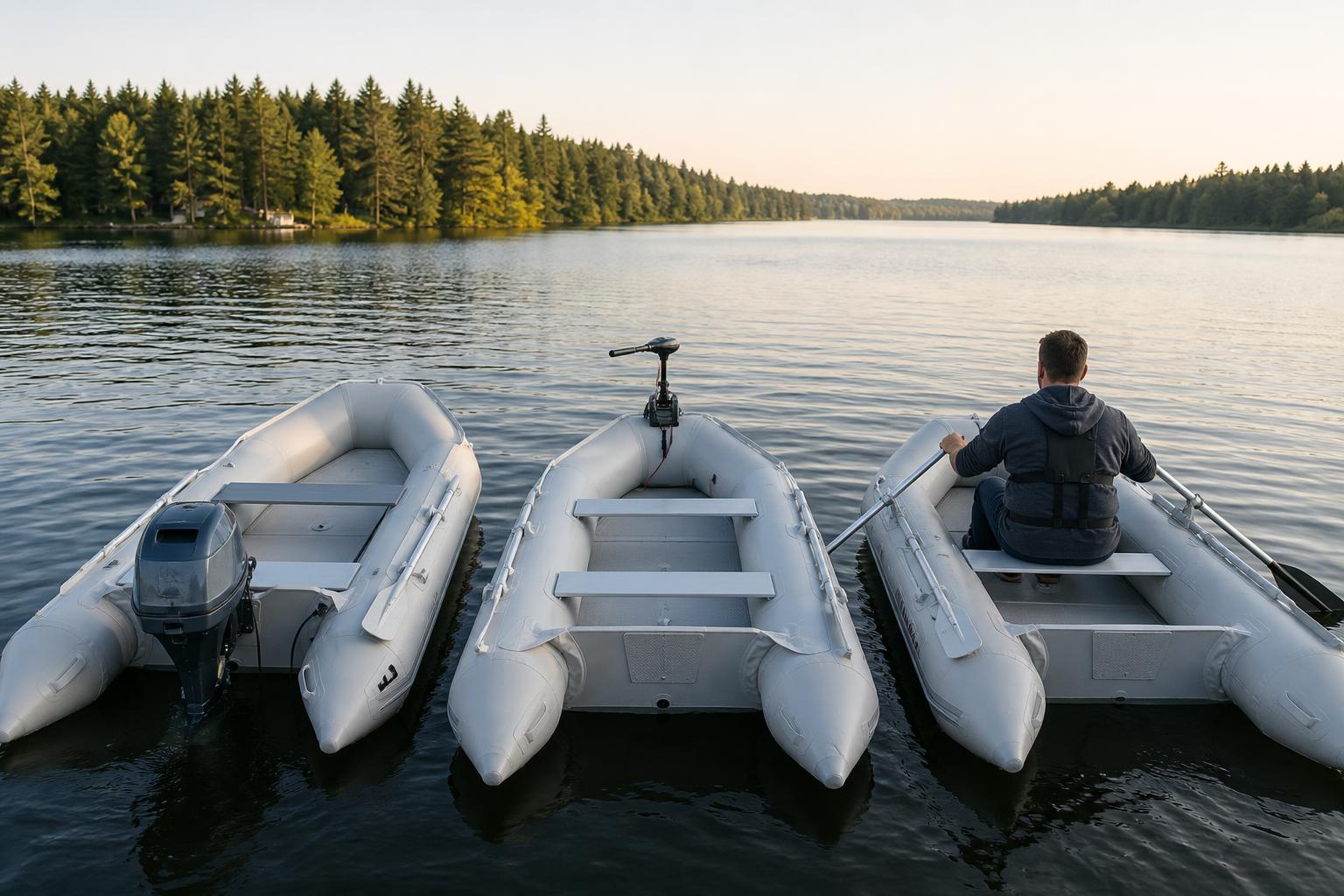
If you've ever tried to bolt a motor onto a soft-sided inflatable boat, you already know it's not as simple as slapping an outboard on the back like you would on a hard-hull skiff. Inflatable boats flex, tubes compress under load, and the transom (if there even is one) has to handle vibration and torque without tearing loose from the fabric. Pick the wrong mounting setup and you'll deal with a wobbly ride, a motor that kicks up out of the water on every wave, or worse — a transom that fails mid-trip. After years of outfitting inflatable boats, kayaks, and KaBoats, we've found that most buyers fall into one of three camps: transom mount users who want a straightforward gas or electric outboard, bow mount users who want precision boat control for fishing, and rowing frame users who prioritize manual control, exercise, or backup propulsion. Let's break down each option so you can match it to how you actually use your boat.Transom Motor Mounts: The Default Choice for Most Inflatables
A transom mount is exactly what it sounds like — a reinforced flat panel at the stern of the boat where an outboard motor clamps on. This is the setup built into the vast majority of inflatable boats designed for motorized use, and it's the simplest way to add power if your boat already has a proper transom. The key thing to look for is what the transom is actually made of. Cheap inflatable boats often use thin plywood with minimal reinforcement, which flexes under motor torque and eventually delaminates from water exposure. That's why boats like the 14' Saturn KaBoat SK430 Micro Skiff use a marine-grade plywood transom wrapped in fiberglass — it's rated to handle up to 8 HP (or 10 HP with a 2-stroke), which is plenty for a hybrid kayak-boat that seats up to 3 people. The fiberglass coating matters here: it keeps water from soaking into the wood over seasons of use, which is the #1 cause of transom failure on budget inflatables.Who Should Choose a Transom Mount
- You want the simplest, most proven setup with no extra hardware
- Your boat already has (or can accept) a built-in transom
- You're running a gas outboard between 2.5 and 15 HP for cruising, fishing, or use as a yacht tender
- You want the option to switch between paddling and motoring on the same boat, like on the KaBoat
Bow Mounts: Precision Control for Fishing
Bow-mounted motors — almost always electric trolling motors — sit at the front of the boat instead of the back. Anglers love them because you can steer the boat toward structure or drifting fish with foot-pedal or remote control while keeping both hands free for casting. On an inflatable, a bow mount typically requires a dedicated mounting bracket rated for the tube diameter and a battery placed low in the boat for stability. The tradeoff is that bow mounts add weight up front, which can affect how the boat handles waves and wake, especially on smaller inflatables. They also draw down a marine battery fairly quickly compared to a gas outboard's fuel tank, so they work best for calm-water fishing trips rather than long-distance cruising. If your primary use case is bass fishing on a pond or slow river, a bow mount paired with a quality trolling motor is hard to beat for stealth and control.Rowing Frames: The Backup Plan (and Sometimes the Main Plan)
Rowing frames replace or supplement motor power with oars mounted on a rigid frame that sits inside the boat. They're common on whitewater rafts and inflatable dinghies where reliability without fuel or batteries is a priority — think river trips, remote fishing access, or simply wanting a workout on the water. A rowing frame isn't mutually exclusive with a motor mount. Plenty of inflatable boat owners run a small transom motor for covering distance and keep a rowing setup as backup propulsion if the motor fails or runs out of gas. If you're outfitting a boat for serious backcountry use, this redundancy is worth the extra weight and setup time.Comparing the Three Options
| Feature | Transom Mount | Bow Mount | Rowing Frame |
|---|---|---|---|
| Best for | General cruising, tenders, mixed-use boats | Precision fishing, slow-speed maneuvering | Backup propulsion, remote trips, exercise |
| Power source | Gas or electric outboard | Electric trolling motor + battery | Human power (oars) |
| Typical horsepower / effort | Up to 8-15 HP depending on transom rating | Low-thrust electric motors (30-55 lb thrust common) | None — manual rowing |
| Installation complexity | Low if boat has built-in transom | Moderate — needs bracket + battery placement | Moderate — frame needs to fit tube diameter |
| Maintenance | Standard outboard maintenance | Battery charging, connector care | Minimal — oars and frame hardware only |
| Fuel/power dependency | Yes (gas or battery) | Yes (battery) | None |
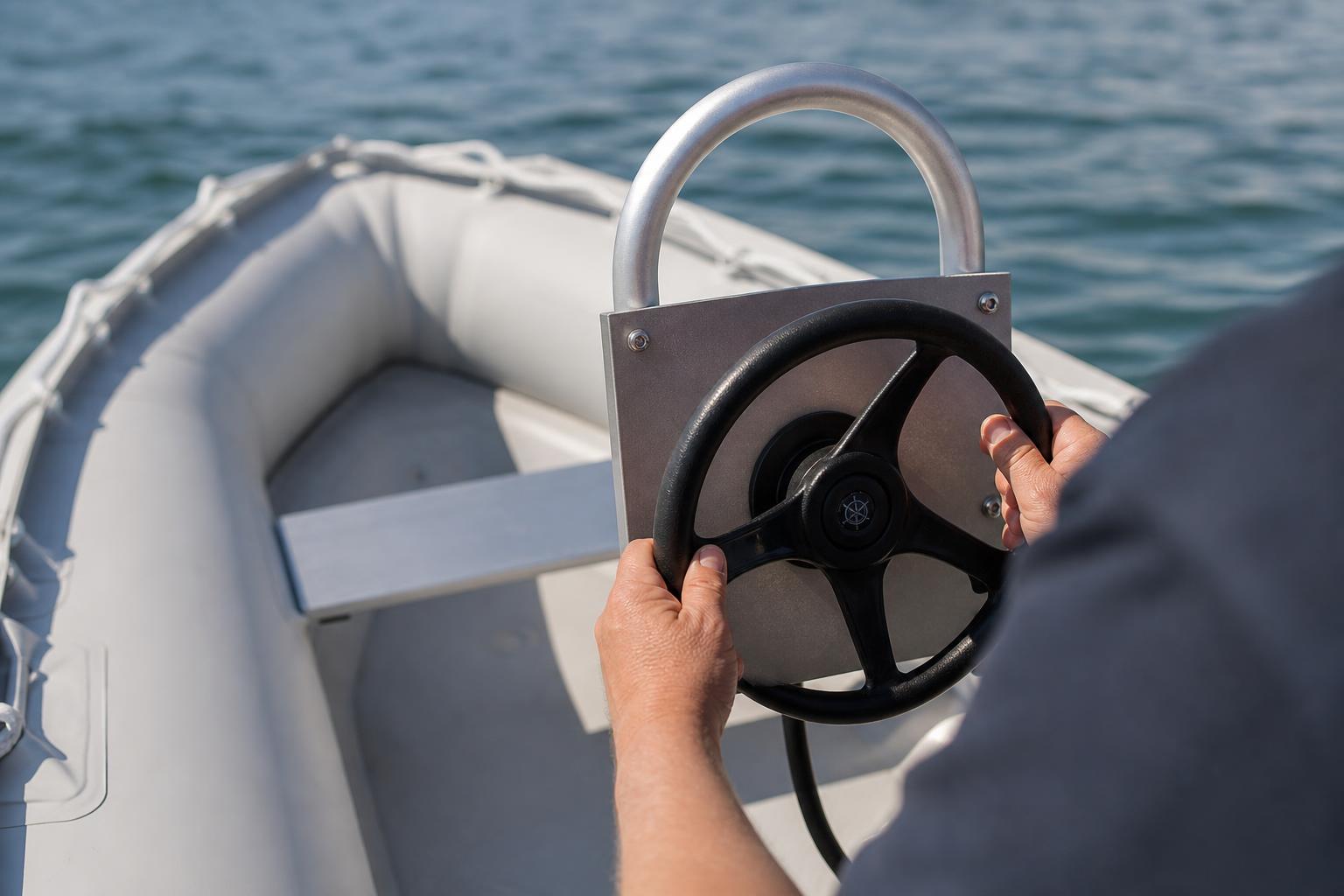
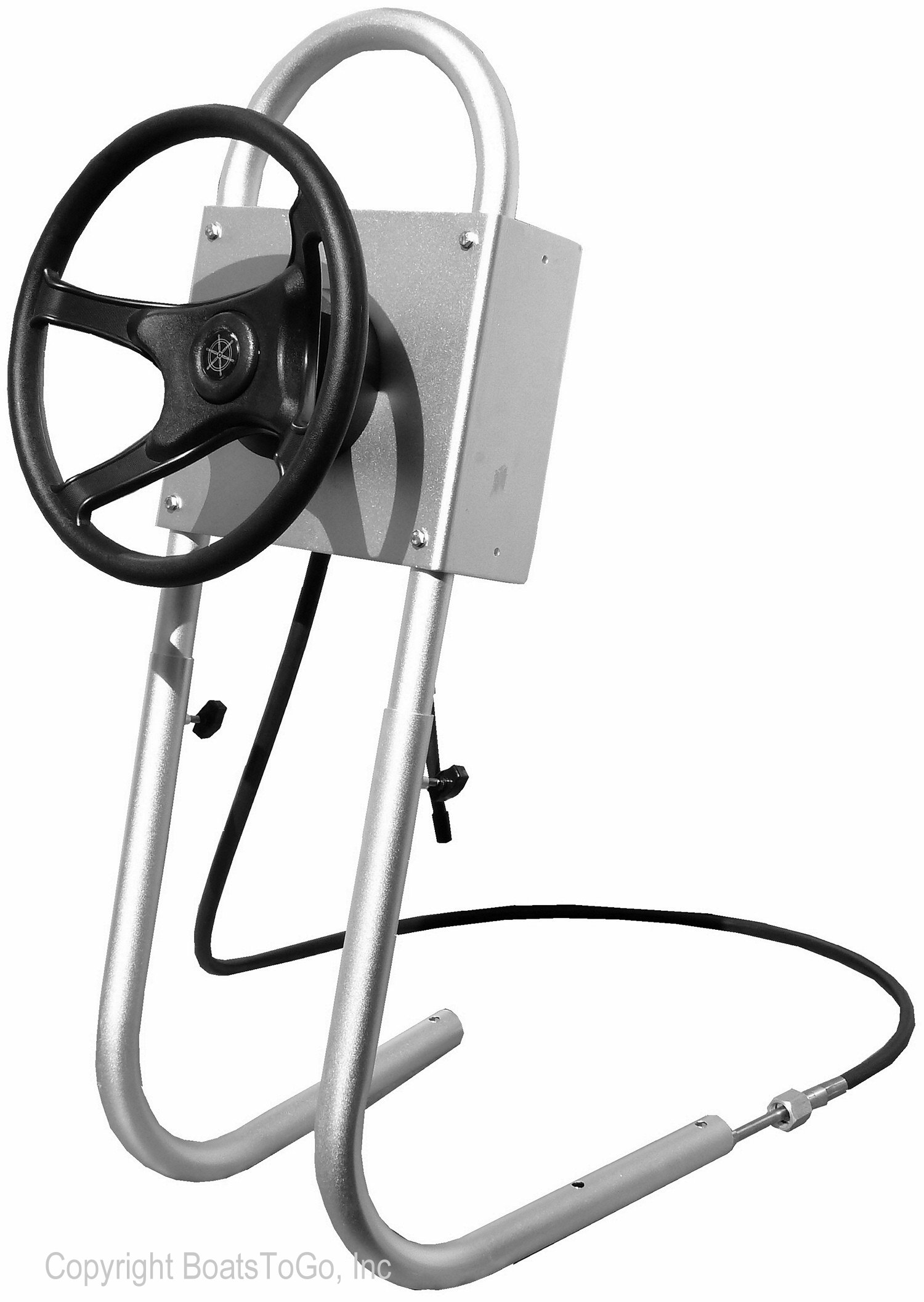
Don't Forget Steering Control
Matching Your Mount to Your Boat
If you're shopping for a hybrid setup that can go from paddling to motoring without switching boats, something like the 14' Saturn KaBoat SK430 is worth a look. It's built around a fiberglass-reinforced plywood transom rated for 8 HP (10 HP for 2-strokes), with 13" diameter tubes and an air deck floor for stability — enough structure to handle real motor torque, but still light enough to fold into a 45 x 24 x 13 travel bag when you want to paddle instead.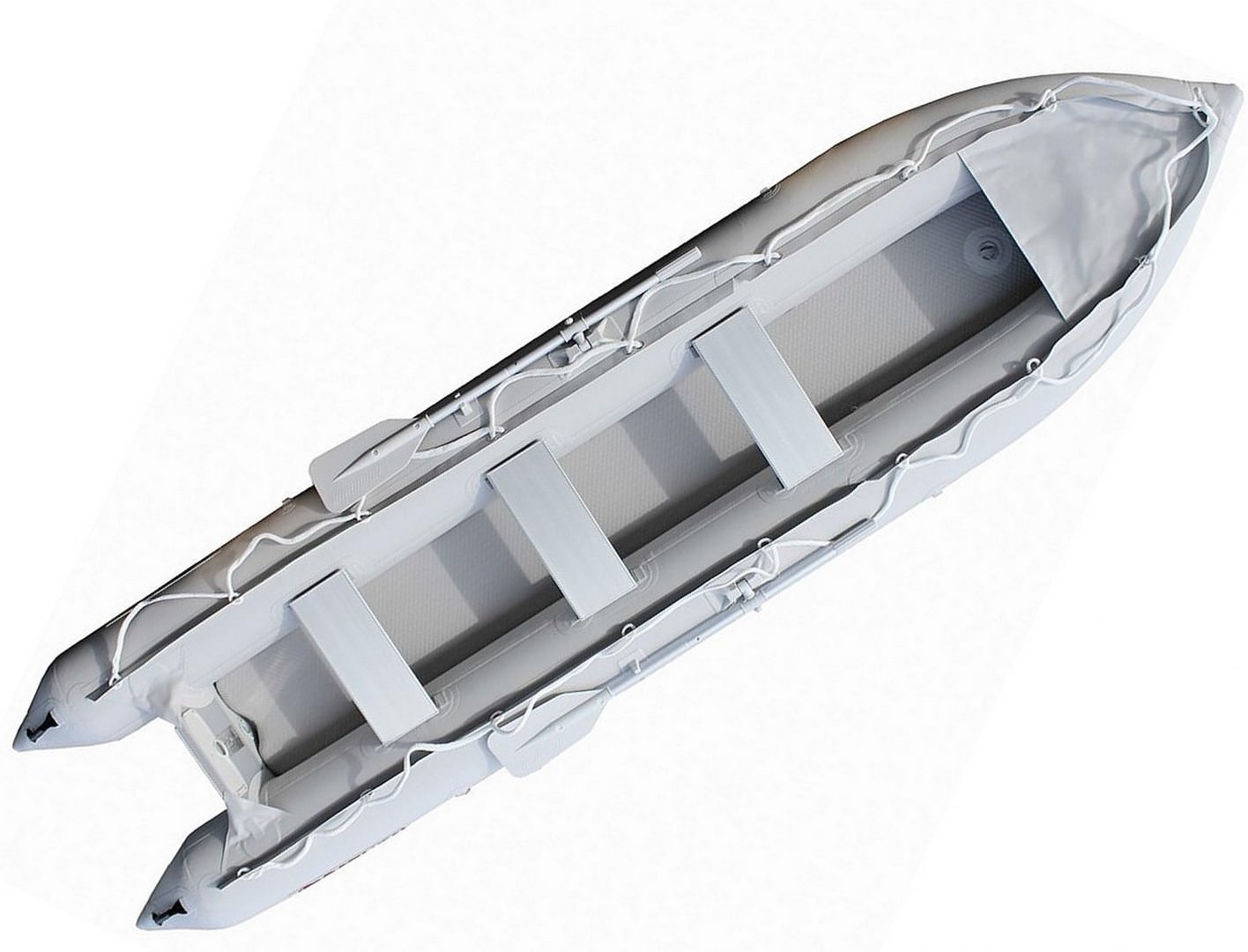
Final Thoughts