

Top rated
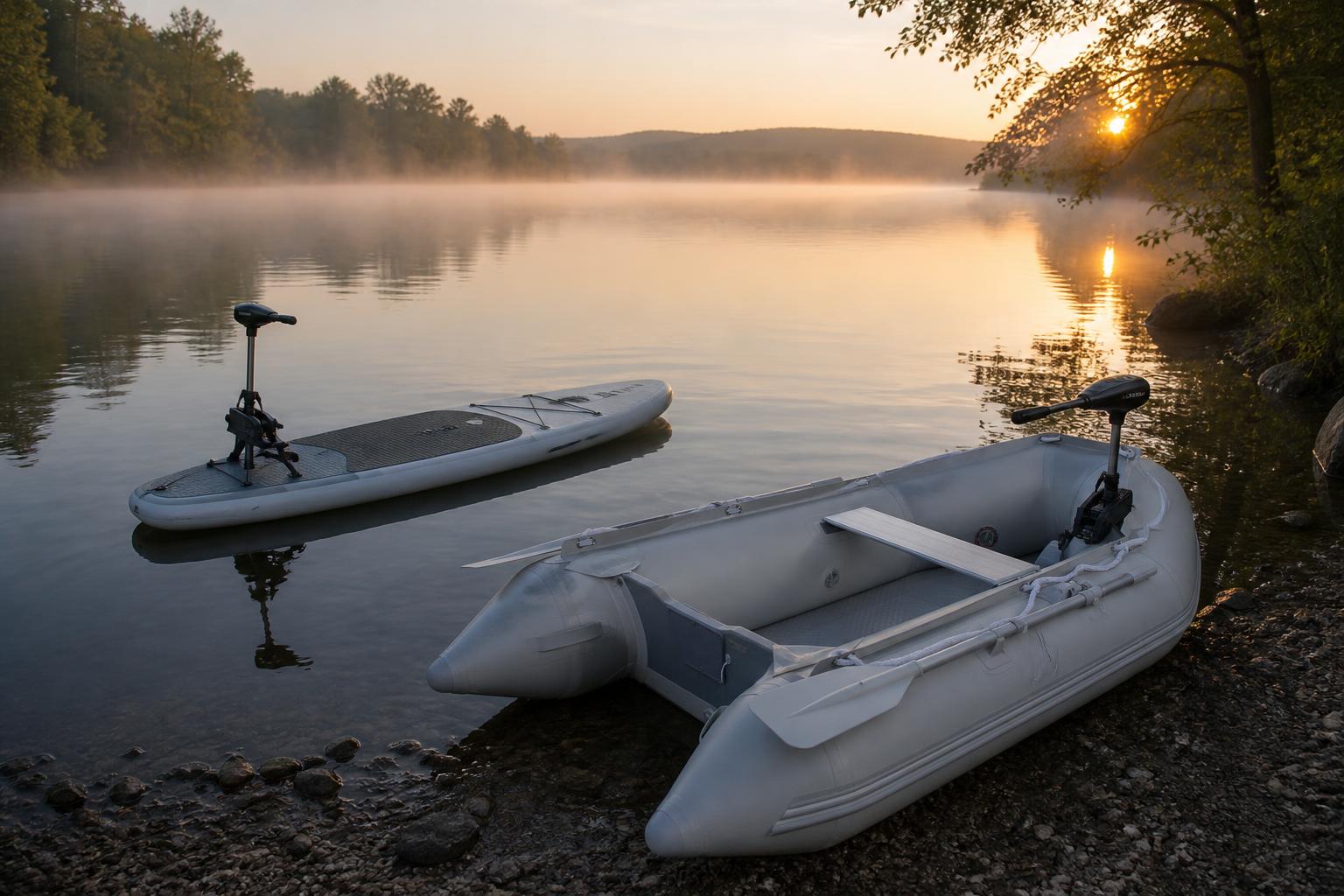
Electric Fin Motors vs Trolling Motors for Kayaks & SUPs
Why Paddlers Are Ditching the Paddle (At Least Sometimes)
If you've spent any time on kayak or SUP forums lately, you've noticed the same debate popping up over and over: fin motor or trolling motor? Both promise to turn your human-powered craft into something that can cover more water with less sweat, but they go about it in very different ways. Picking the wrong one means wasted money, a boat that handles like a shopping cart, or a battery that dies halfway back to the launch.
This guide breaks down how each type actually works, where each one shines, and which paddlers should be looking at which option. We'll also talk about how this applies to small inflatables like dinghies and tenders, not just kayaks and SUPs, since the same physics apply any time you're bolting a motor onto a lightweight hull.
What Is an Electric Fin Motor?
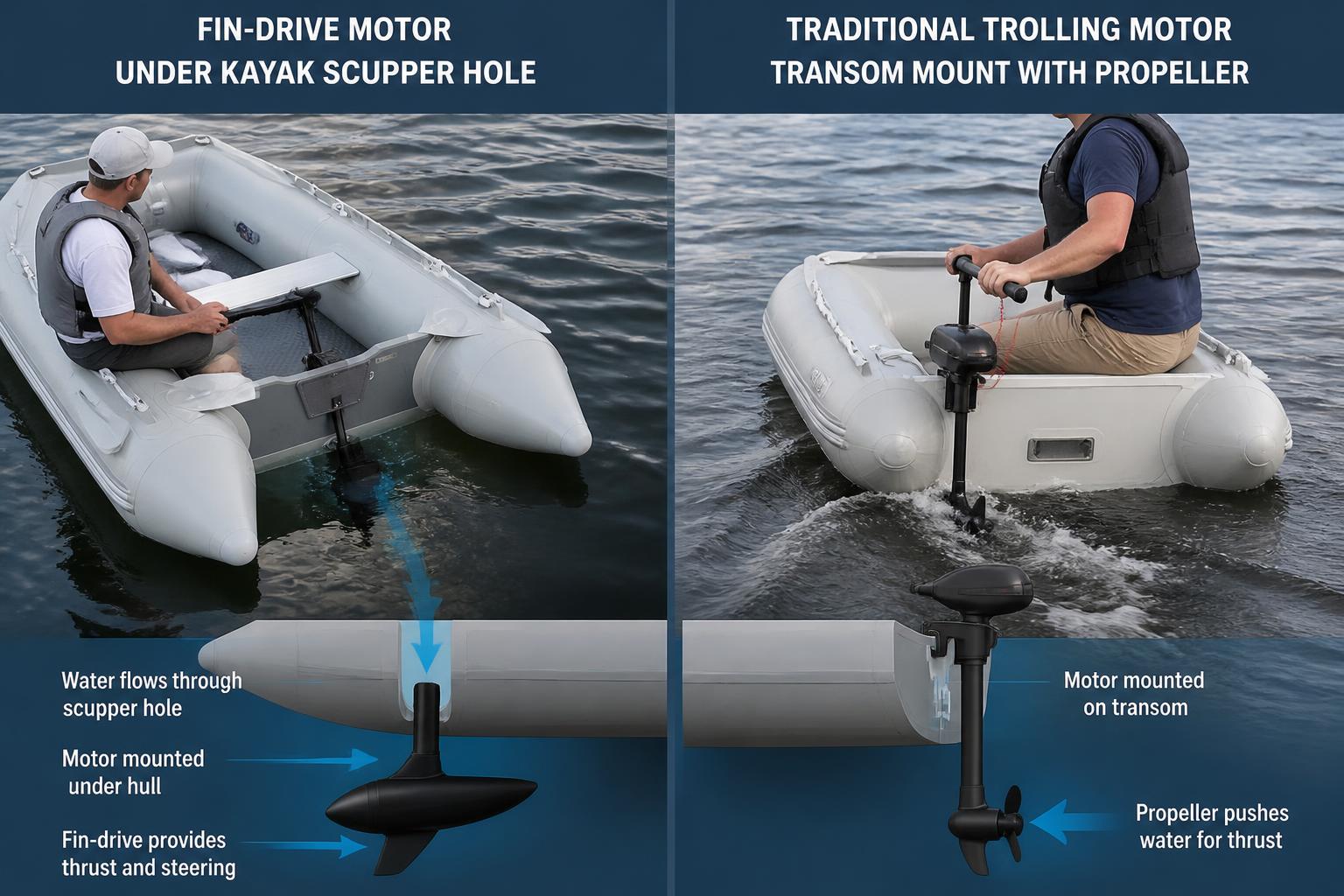
Fin motors (sometimes called "fin drive" motors) are a newer category built specifically for kayaks and paddleboards. Instead of a traditional prop on a long shaft, they use a flexible fin that oscillates side to side, mimicking a fish's tail. The motor housing is compact, usually mounts through a scupper hole or a dedicated bracket, and sits much closer to the hull than a trolling motor shaft would.
The main selling points are weight and stealth. Most fin motors weigh somewhere in the 3-6 lb range for the drive unit alone, which matters a lot when you're hand-carrying a kayak to the water. They also run quieter than a prop motor at low speed, which is a real advantage if you're trying to sneak up on fish or just enjoy a silent paddle without scaring off wildlife.
The trade-off is power and durability. Fin motors are designed for flat water and light currents. Push them into wind chop, a strong river current, or heavy loads, and they struggle. Most can't handle running a loaded inflatable dinghy or anything over a few hundred pounds of combined weight.
What Is a Trolling Motor?
Trolling motors are the tried-and-true option that's been bolted onto fishing boats, canoes, and small craft for decades. They use a traditional prop on a shaft, mounted via a transom bracket, a clamp, or a specialized kayak mount. They come in a wide range of thrust ratings, typically 30 to 55 lbs of thrust for kayak and small-boat applications, and they run on standard 12V marine batteries.
The big advantages are raw power and versatility. A trolling motor can push a loaded kayak against a real current, handle choppy water, and keep going for hours if you've got the battery capacity. They're also easier to find parts and accessories for since the format has been standard for so long.
The downside is weight and bulk. A trolling motor plus battery can easily add 20-40+ lbs to your setup, which changes how your kayak sits in the water and how it handles. You'll also need a sturdy mount, and the shaft length needs to match your hull depth or you'll end up with the prop too shallow or too deep.
Head-to-Head Comparison
| Feature | Electric Fin Motor | Trolling Motor |
|---|---|---|
| Typical Weight | 3-6 lbs (drive unit) | 15-25 lbs (motor) + 20-30 lbs (battery) |
| Best For | Kayaks, SUPs, light solo paddling | Kayaks, canoes, small inflatables, dinghies |
| Power / Thrust | Low (suited to flat, calm water) | Moderate to high (30-55+ lbs thrust) |
| Noise Level | Very quiet | Quiet, but more prop noise than a fin |
| Handling Current/Wind | Struggles in chop or strong current | Handles moderate current and wind well |
| Run Time | Shorter, smaller built-in or external battery | Longer, scales with external battery size |
| Mounting | Scupper hole or lightweight bracket | Transom clamp, side mount, or kayak-specific bracket |
| Load Capacity Impact | Minimal added weight | Noticeable added weight, needs stable hull |
| Price Range | Generally lower upfront cost | Motor + battery adds up, but more capability per dollar |
Matching the Motor to Your Craft
Kayaks
For a sit-on-top fishing kayak under 12 feet, a fin motor is often the better everyday choice. It's light enough that it won't throw off your trim, it's simple to install and remove, and it gives you just enough push to cover a lake or slow-moving river without tiring yourself out. If you're fishing moving water or need to fight current to get back to the ramp, a small trolling motor with a 30-40 lb thrust rating and a compact lithium battery is the safer bet.
Stand-Up Paddleboards
SUPs are where fin motors really make sense. The hull is already unstable compared to a kayak, so adding 25+ lbs of trolling motor and battery low on the deck can genuinely hurt your balance. A fin motor's low weight and low mounting point keep the board's handling close to normal while still giving you a motorized option for longer crossings or a tired paddle back against the wind.
Small Inflatables and Dinghies
This is where the conversation shifts entirely toward trolling motors, or better yet, small gas outboards. Inflatable tenders carry real weight (passengers, gear, an anchor) and need to push through wake and chop near marinas, which is exactly the scenario fin motors aren't built for.
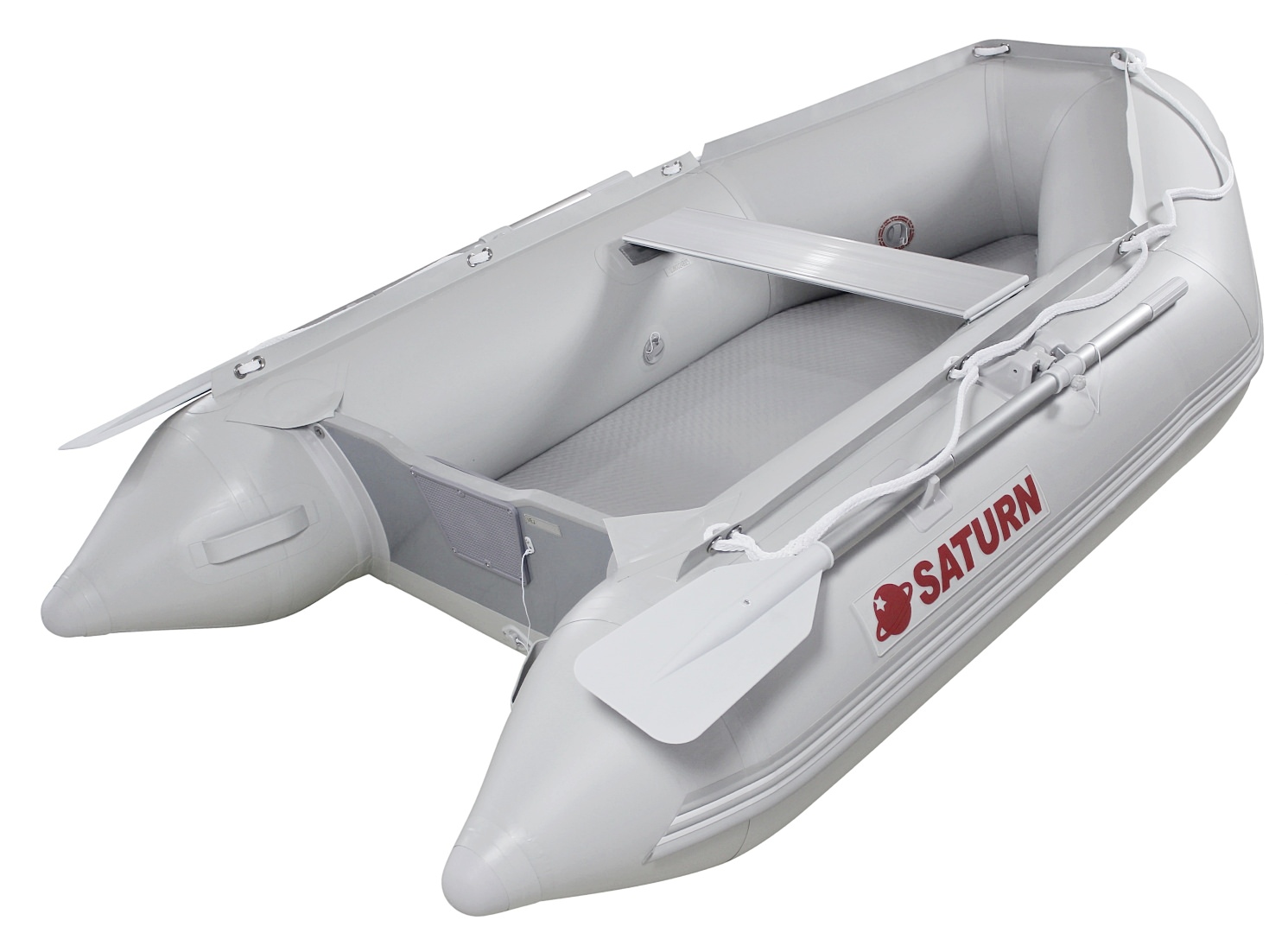
Take the 8.6' Saturn SD260 Inflatable Dinghy as an example. It's rated to carry up to 3 people and up to an 8 HP short shaft outboard motor, with a reinforced 1100 denier PVC hull and a drop-stitch air floor rated to 9 psi for rigidity. A boat in this class is simply too heavy, once loaded, for any fin motor to move effectively. A small transom-mount trolling motor can work for slow, calm-water puttering, but most owners running an SD260-style dinghy as a yacht tender will pair it with a proper short-shaft outboard instead, precisely because the loads and distances involved call for real thrust.
The takeaway: fin motors belong on light, single-person paddle craft. Once you're talking about a multi-passenger inflatable like the SD260, you've moved into trolling motor or small outboard territory.
Battery and Run-Time Realities
Neither option is magic when it comes to battery life, but the way they draw power differs. Fin motors sip power at low speeds because they're moving less mass and typically run on smaller lithium packs, often giving you a couple of hours of casual cruising. Trolling motors draw more current, especially at higher thrust settings, so run time depends heavily on the battery you pair with it. A 12V 50-60 Ah lithium battery paired with a mid-range trolling motor can realistically give you most of a day on the water if you're running at lower speeds and not constantly pushing against current.
If you're planning long days or trips where you can't easily recharge, trolling motors give you more flexibility because you can simply upsize the battery. Fin motors are more limited since the battery is often built into or tightly integrated with the unit.
Durability and Maintenance
Trolling motors have a prop, which means weeds, fishing line, and debris are a constant maintenance concern, especially in weedy lakes or shallow rivers. Fin motors avoid most of this since the flexible fin doesn't tend to snag line the way a spinning prop does, and there's no risk of prop strikes on rocks in skinny water. On the flip side, fin motors have more complex internal mechanisms to oscillate the fin, and repair options are less widespread simply because the technology is newer and less standardized across brands.
So, Which One Should You Buy?
Here's the short version: if you paddle a kayak or SUP solo on lakes, calm rivers, or protected bays and want a light, quiet assist without changing how your boat handles, go with a fin motor. If you need real power, fight current or wind regularly, carry a passenger or heavy gear, or you're running a small inflatable or dinghy, a trolling motor (or small outboard, depending on the boat's rating) is the smarter investment.
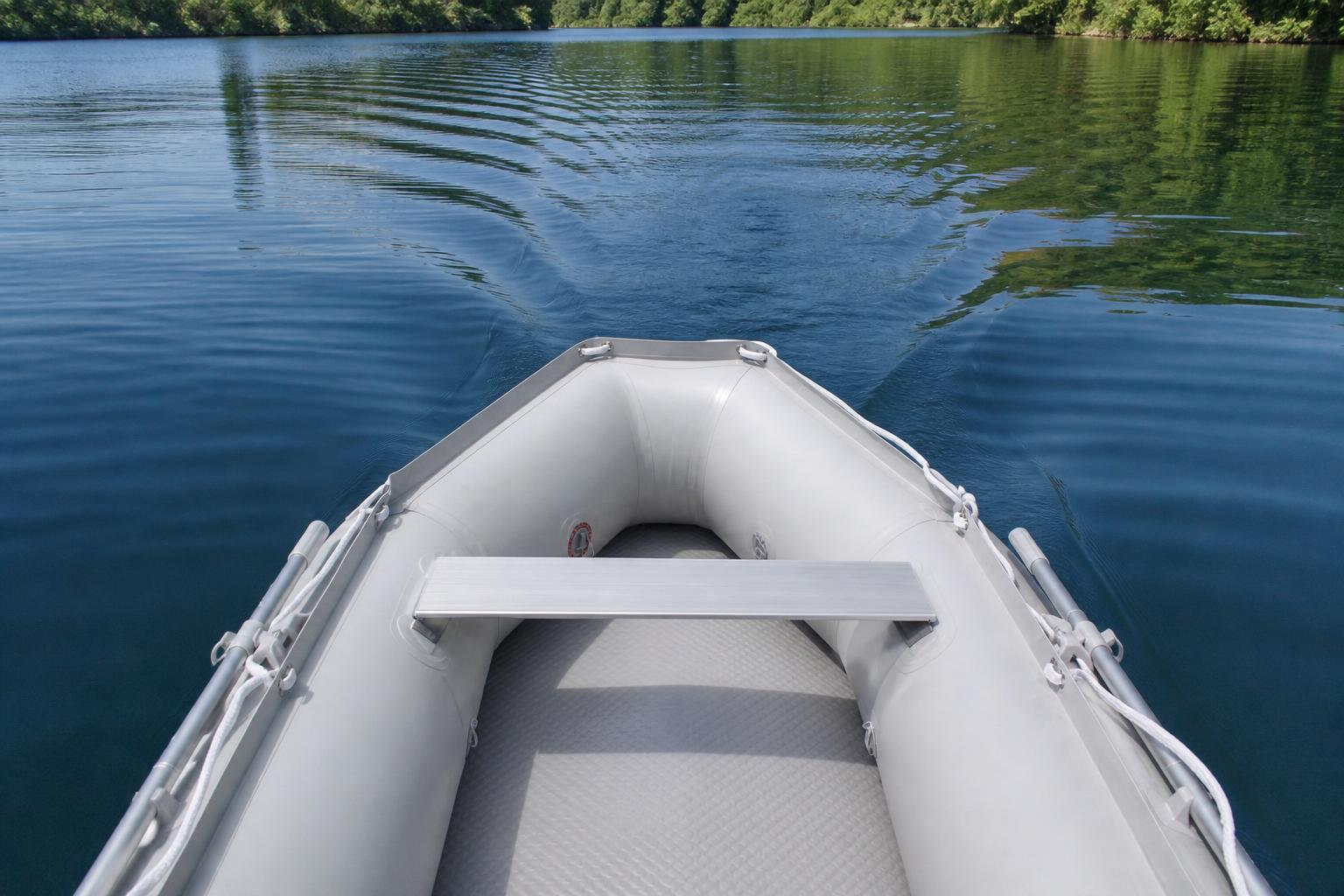
For anyone shopping for a multi-purpose tender that needs serious motor compatibility rather than a light paddle-craft assist, it's worth looking at purpose-built inflatables like the Saturn SD260, which is rated for up to an 8 HP outboard and built to handle real passenger loads, something no fin motor or compact trolling motor setup is designed to do.
Whichever direction you go, match the motor to the water you actually paddle, not the water you wish you paddled. A fin motor on a choppy bay will leave you frustrated, and a heavy trolling motor on a 10-foot SUP will leave you fighting for balance before you even hit the throttle.