

Top rated
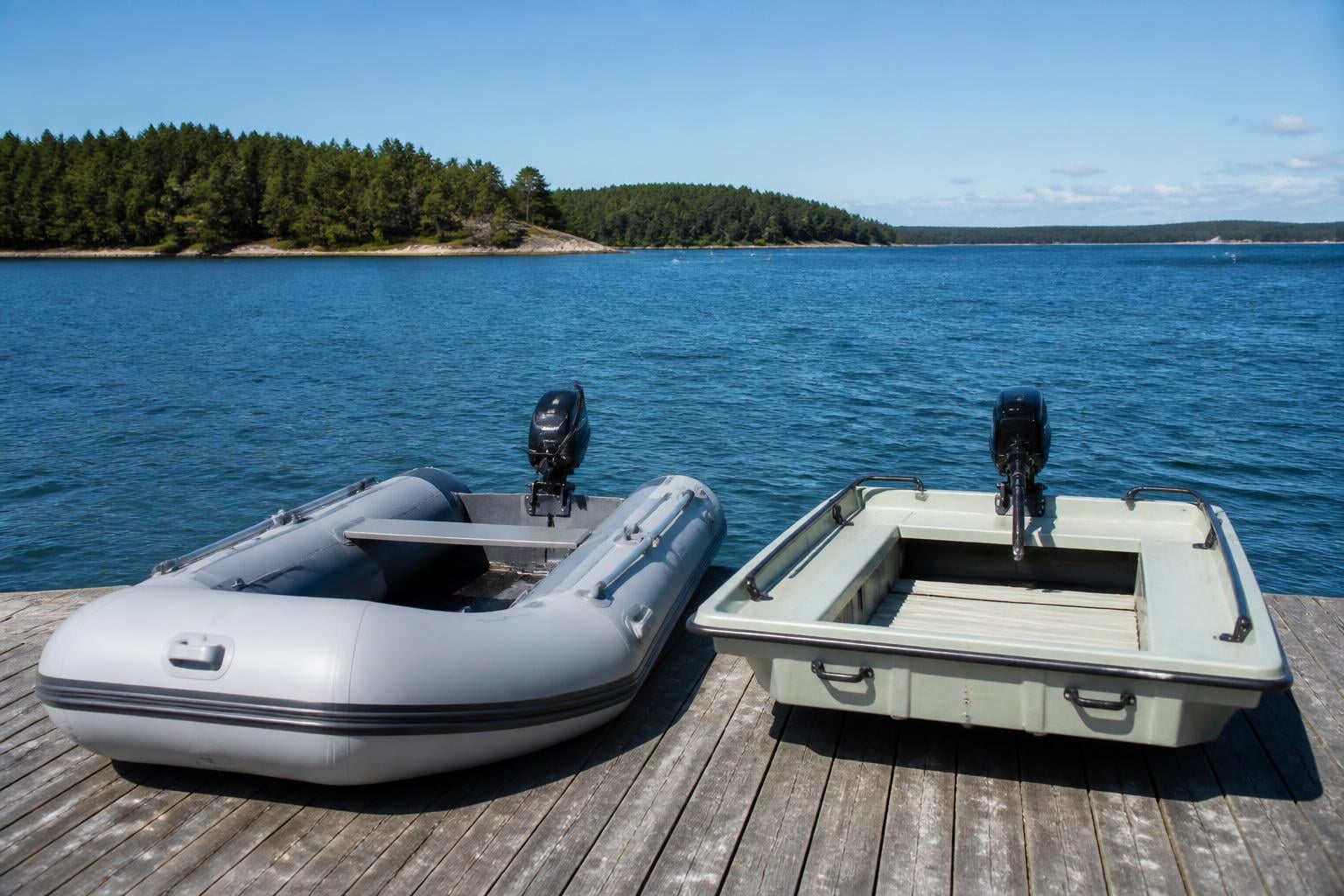
Inflatable Dinghy vs. KaBoat: Which Portable Boat Is Right for You?
Choosing between an inflatable dinghy and a KaBoat™ micro skiff comes down to how you plan to use it. A traditional inflatable dinghy such as the 11' Saturn SD330 prioritizes passenger capacity, a broad stable platform, and tender-duty versatility. A KaBoat™—BoatsToGo’s kayak-and-boat crossover—uses a long, narrow hull to make paddling, solo fishing, and low-horsepower cruising more practical. Both pack down for transport, both accept motors, and both use air-deck floors, but they feel very different on the water.
Inflatable Dinghy vs. KaBoat: The Core Difference
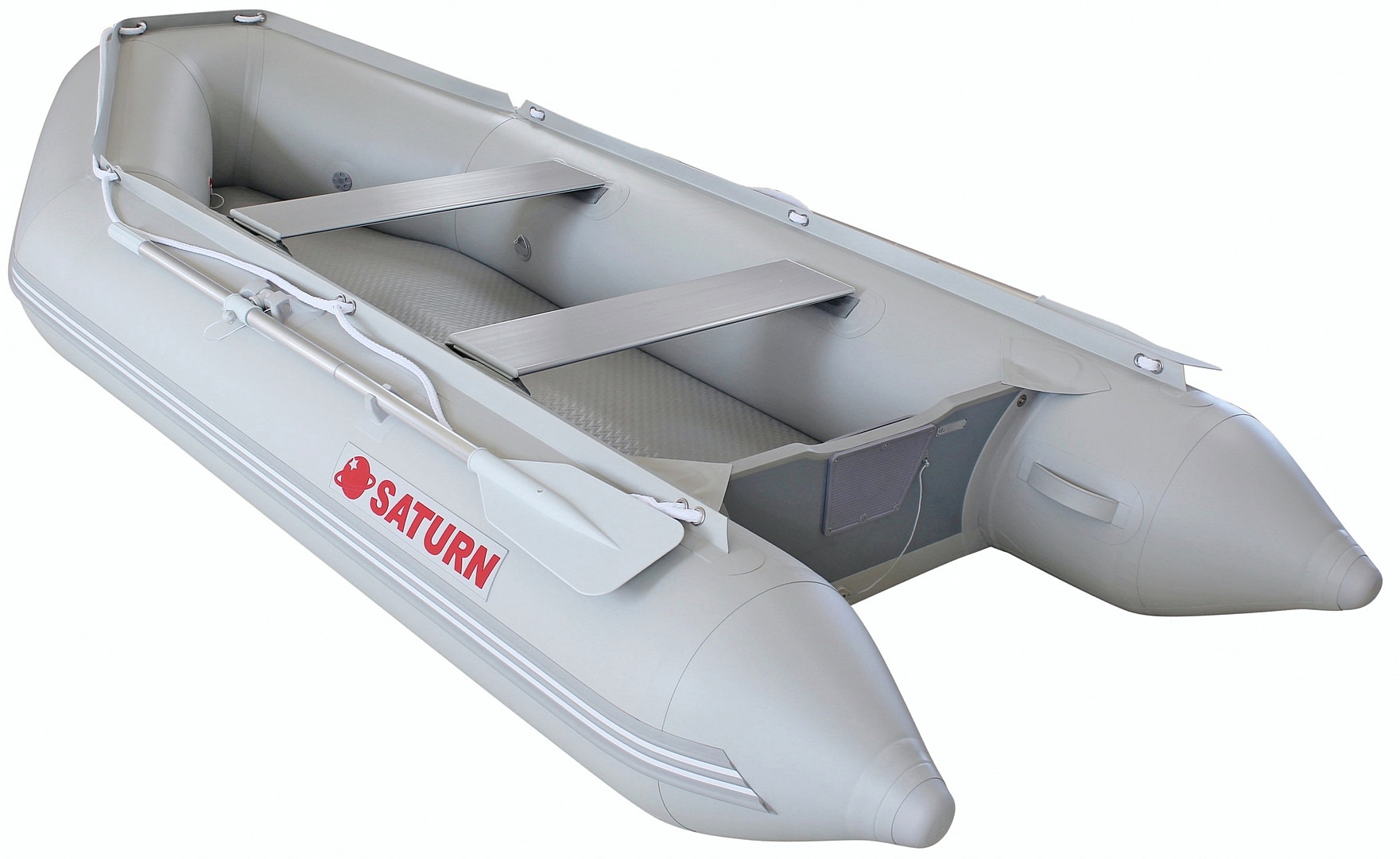
An inflatable dinghy has a wide beam, large-diameter tubes, and an open interior designed around carrying people, gear, and a motor. It is the more natural choice for getting a family to shore from a sailboat, moving supplies from a dock, running a compact fishing boat, or serving as an emergency tender.
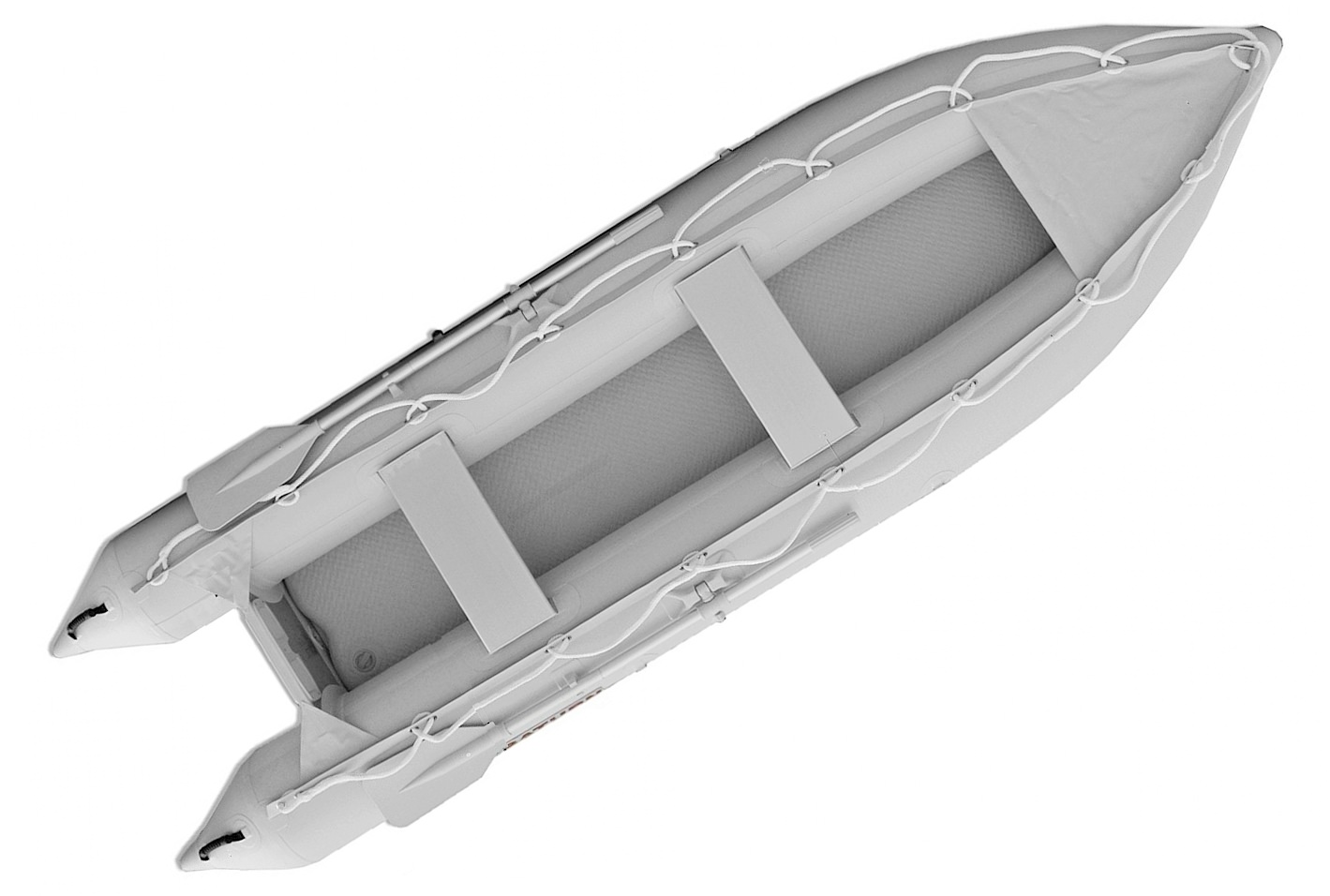
A KaBoat™ micro skiff is a hybrid: it has the narrow, streamlined profile of an inflatable kayak but adds an air deck, transom, and motor capability. KaBoat™ is a registered trademark introduced and developed by BoatsToGo in 2006. The narrow hull is easier to paddle and can move efficiently with modest power, while still providing the utility of a small inflatable boat.
Quick Comparison: Dinghy or KaBoat?
| Model | Best Fit | Capacity | Motor Capacity | Tube Diameter | Packed Shipping Size | Starting Price |
|---|---|---|---|---|---|---|
| 11' SD330 Dinghy | Tender duty, families, general fishing | 4 + 1 | 15 HP short shaft; 125 lb maximum | 16.5 in. | 41 x 26 x 15 in. | $899 |
| 12' SK396 KaBoat | Solo or two-person paddling and light fishing | 2 + 1 | 2.5 HP | 13 in. | 35 x 24 x 12 in. | $559 |
| 14' SK430 KaBoat | Fishing, touring, rivers, and more motor range | 3 | 8 HP; 10 HP if 2-stroke | 13 in. | 39 x 24 x 13 in. | $659 |
| 15' SK470XL Heavy-Duty KaBoat | Remote fishing, hunting, expeditions, workboat use | 3 + 1 | 10 HP 4-stroke; 15 HP 2-stroke | 20 in. | 45 x 26 x 16 in. | $1,099 |
Seating and Interior Space
Choose a dinghy when carrying people is the priority
The 11-foot SD330 is the clear choice when your regular trips involve more than one or two adults. Its rated capacity is 4 + 1, and the product description notes that it can accommodate up to five people, with three to four providing extra comfort. Its wider, more traditional dinghy layout makes it better suited to passengers, bags, dock lines, fuel, and the everyday clutter that comes with tender use.
That extra room is meaningful if the boat will shuttle crew between an anchored sailboat and shore. It also matters for family fishing: several people can ride aboard without turning every cast, tackle box, and cooler into a coordination exercise.
Choose a KaBoat for a narrower, more personal cockpit
The KaBoat lineup is purpose-built for a smaller crew and a more direct connection to the water. The 12' SK396 is rated for 2 + 1 people, while the 14' SK430 has a three-person capacity. These are sensible choices for a solo angler, a pair of paddlers, or an angler plus a child—not for routinely moving a full family.
The 15' SK470XL increases capacity to 3 + 1 and has a much more substantial build for anglers and expedition users who need gear space. Still, its long, narrow form remains fundamentally different from the open, broad deck of a conventional dinghy.
Stability: Broad Dinghy Platform vs. Long, Narrow Micro Skiff
For the most forgiving side-to-side stability and the easiest boarding, a dinghy is generally the better format. The SD330 has 16.5-inch tubes and a high-pressure drop-stitch air deck rated up to 9 psi. When properly inflated, that floor is designed to provide a rigid surface suitable for standing, similar in feel to a plywood floor, while avoiding the weight and assembly burden of a rigid floor system.
KaBoats are also designed to be stable enough for practical fishing use, including standing to cast, but they achieve their performance differently. Their 13-inch tubes on the SK396 and SK430 support a sleek, paddle-friendly hull that trades some broad-platform feel for efficiency and access. The SK470XL is the outlier: its oversized 20-inch tubes, 150 mm air deck, and heavy-duty construction provide substantially more buoyancy and rigidity for demanding conditions.
If your priority is helping children aboard, frequently standing while several people move around, or loading bulky gear, lean toward the SD330. If your priority is quietly slipping into narrow water, paddling efficiently, and fishing with one or two people, a KaBoat is often the more enjoyable shape.
Motor Setup and On-Water Performance
Motor capacity is one of the biggest practical separators between these compact inflatable boats.
- SD330 dinghy: Accepts up to a 15 HP, 15-inch short-shaft motor, with a 125-pound maximum motor weight. BoatsToGo lists an approximate speed of 17 mph with a 10 HP motor and two adults.
- SK396 KaBoat: Rated for up to 2.5 HP. This is the lightweight option for electric propulsion, quiet cruising, or small gas power.
- SK430 KaBoat: Rated for 8 HP, or up to 10 HP with a 2-stroke engine. It is the middle ground for buyers who want a true paddle-and-motor crossover with more range.
- SK470XL KaBoat: Rated for a 10 HP 4-stroke or a 15 HP 2-stroke. Its fiberglass-covered transom and heavy-duty hull make it the strongest KaBoat choice for serious powered use.
The SD330 is the better pick for buyers who specifically want 15 HP short-shaft capability in a conventional inflatable tender. The KaBoat range makes more sense when low-horsepower efficiency matters, especially for paddlers who want to switch between a kayak paddle, an electric motor, and small gas power depending on the trip.
Fishing Space and Gear Carrying
For relaxed multi-person fishing, the SD330’s wider interior is an advantage. Anglers have more room to position tackle, a cooler, landing gear, and passenger seating. The drop-stitch air deck also gives the crew a firm place to stand while casting or moving around the boat.
For technical fishing, especially in skinny water, rivers, protected coves, and tight shorelines, the KaBoat profile has a different appeal. Its streamlined hull can be paddled into places that are less convenient for a wider tender. The SK396 is a compact, simple option for light tackle and a small motor. The SK430 gives anglers more length and much greater engine capacity without giving up its paddle-friendly character.
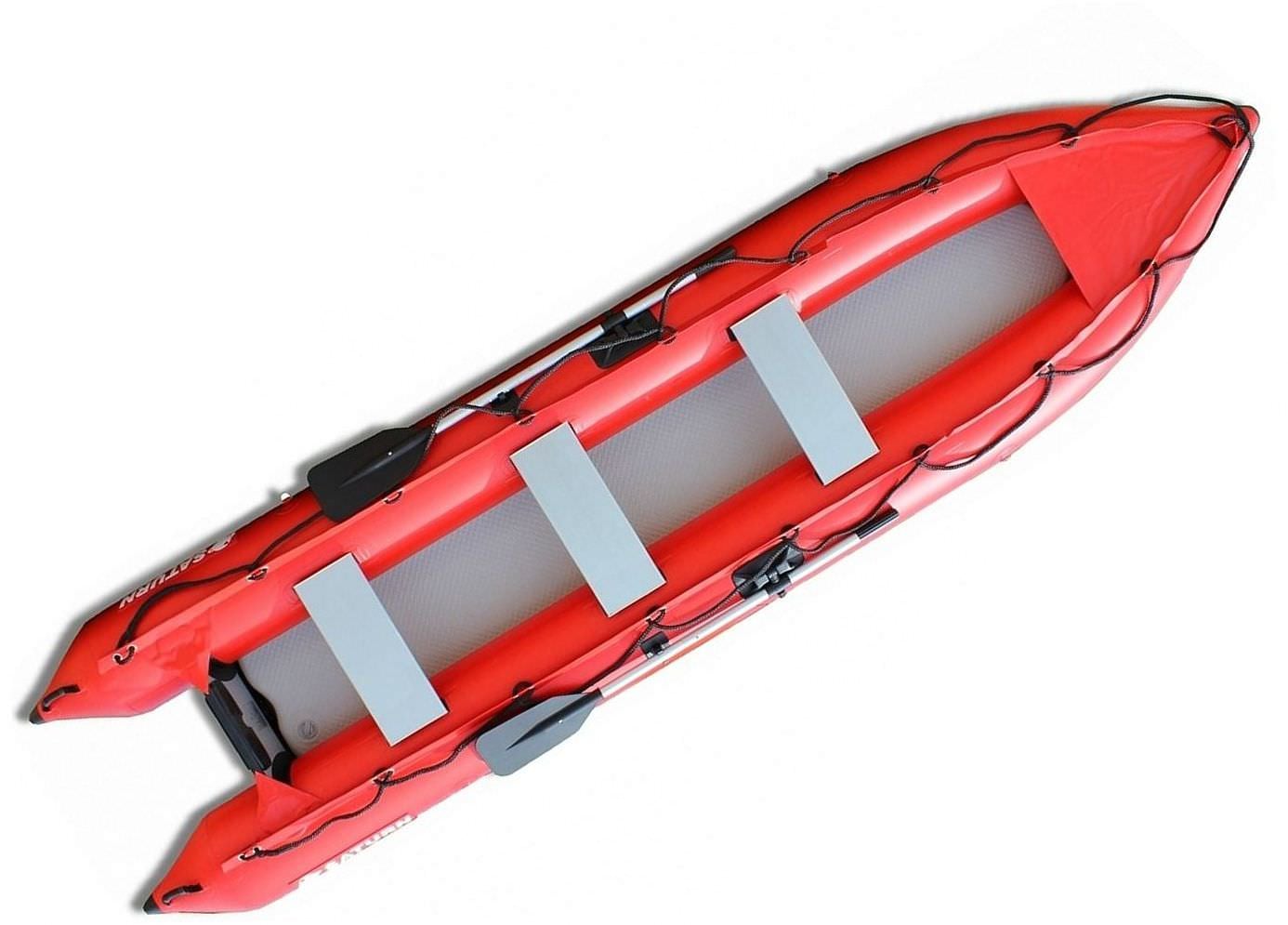
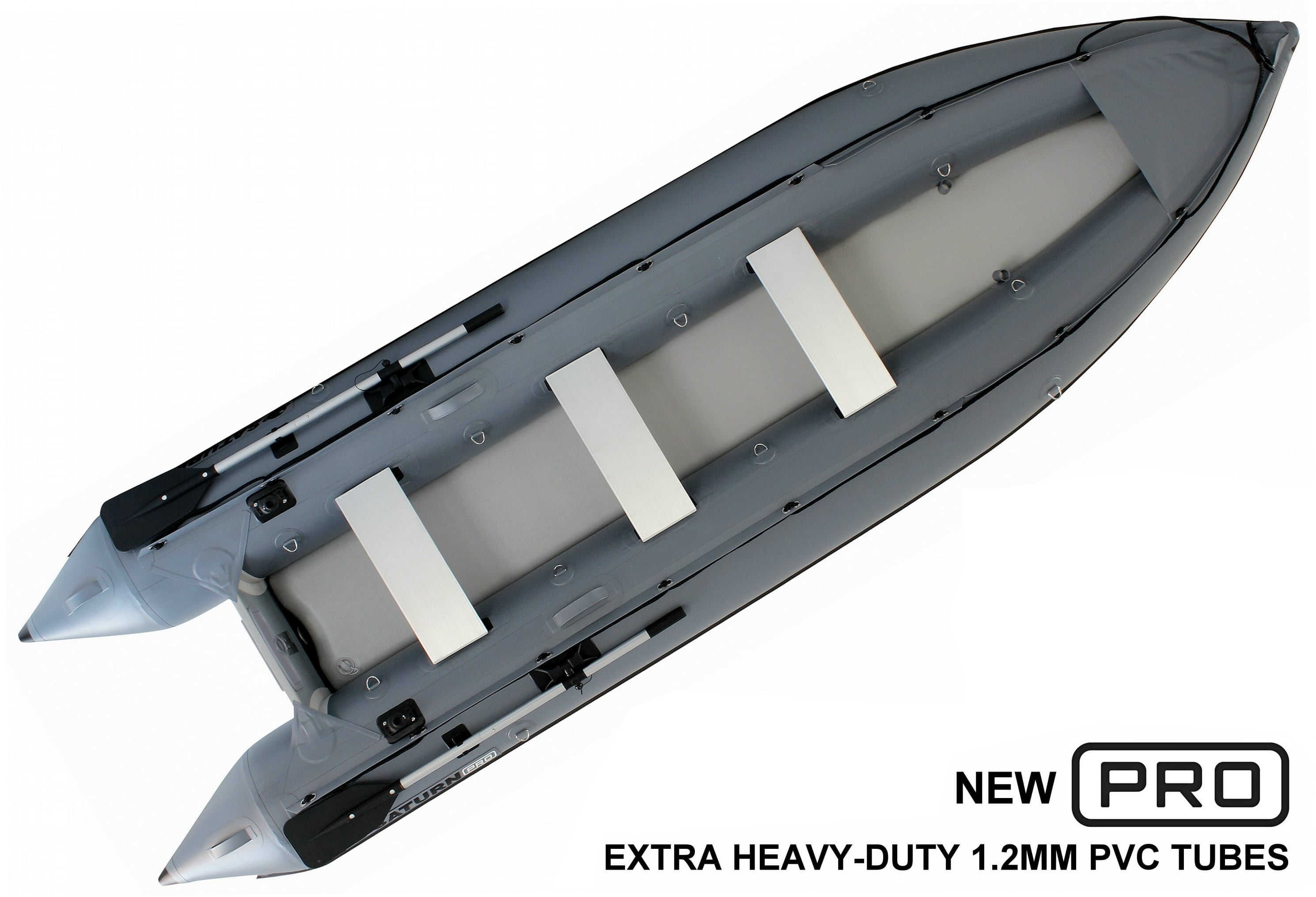
The SK470XL is the fishing-focused heavy-duty option. Its dark-gray PRO hull uses 1.2 mm, 2000-denier PVC tubes, with an extra-thick 1.5 mm PVC bottom. It includes two built-in PVC rod holders, two patches for rod holders, cockpit grab handles, and eight D-rings for organizing gear. Four separate air chambers plus one floor chamber add redundancy, and heavy-duty rub strake protectors run along both sides.
Portability and Storage
All four boats solve the basic storage problem that comes with rigid skiffs: they deflate for vehicle transport and off-season storage. But the smaller KaBoats have the edge for buyers who need the most compact package possible.
The SK396 ships in a 35 x 24 x 12-inch package and has a listed kayak packing size of 34 x 21 x 10 inches. That compact footprint is particularly appealing to apartment dwellers, RV travelers, campers, and anglers who want to keep a boat in the trunk or cargo area rather than on a trailer.
The SK430 ships at 39 x 24 x 13 inches, while the larger SK470XL ships at 45 x 26 x 16 inches. The SD330’s 41 x 26 x 15-inch shipping size is still highly portable for an 11-foot tender with a five-person maximum stated capacity, but it is a broader boat and should be selected for its utility rather than as the smallest possible package.
Which Boat Is Best for Your Use?
Best inflatable tender for a yacht or sailboat: SD330
Choose the 11' SD330 inflatable dinghy if you need to carry people and supplies reliably between boat and shore. Its 4 + 1 capacity rating, 16.5-inch tubes, rigid-feeling 9 psi drop-stitch air deck, and 15 HP short-shaft compatibility make it the more traditional tender solution. It also makes sense as a versatile family fishing boat or emergency raft.
Best compact paddle-and-motor crossover: SK396
Choose the 12' SK396 KaBoat if portability, paddling, and modest power are your priorities. With a 2 + 1 capacity and 2.5 HP engine limit, it is best viewed as an agile personal watercraft for one or two users rather than a high-capacity tender. At $559, it is also the most affordable model in this comparison.
Best all-around KaBoat for fishing and cruising: SK430
Choose the 14' SK430 KaBoat if you want more motor capability than the SK396 offers. Its 8 HP rating—or 10 HP with a 2-stroke—makes it a strong option for anglers and explorers who want to cover more water, yet still value a narrow hull that can be paddled and packed into a medium-sized bag.
Best heavy-duty KaBoat for remote water: SK470XL
Choose the 15' SK470XL Heavy-Duty KaBoat for rugged fishing, hunting, wilderness travel, or workboat-style tasks. Its 20-inch tubes, 1.2 mm PVC hull, reinforced bottom construction, four separate air chambers, and up-to-15-HP two-stroke capacity set it apart from lighter KaBoat models. It is the choice for buyers who want KaBoat efficiency but need significantly more durability and load-carrying confidence.
Final Buying Advice
Buy the inflatable dinghy if your boat needs to be a tender first: more passengers, more interior room, easier loading, and a broad stable platform are the priorities. The SD330 is the practical answer for family outings, yacht support, and general-purpose use where the boat must do many jobs well.
Buy a KaBoat if your boat needs to be a personal exploration platform first. The SK396 favors compact transport and light power; the SK430 adds meaningful motor capability; and the SK470XL is built for hard use, serious fishing setups, and remote trips. The best portable boat is not necessarily the biggest or most powerful one—it is the design that matches the number of people, motor, gear load, and waterways you will actually use.