

Top rated
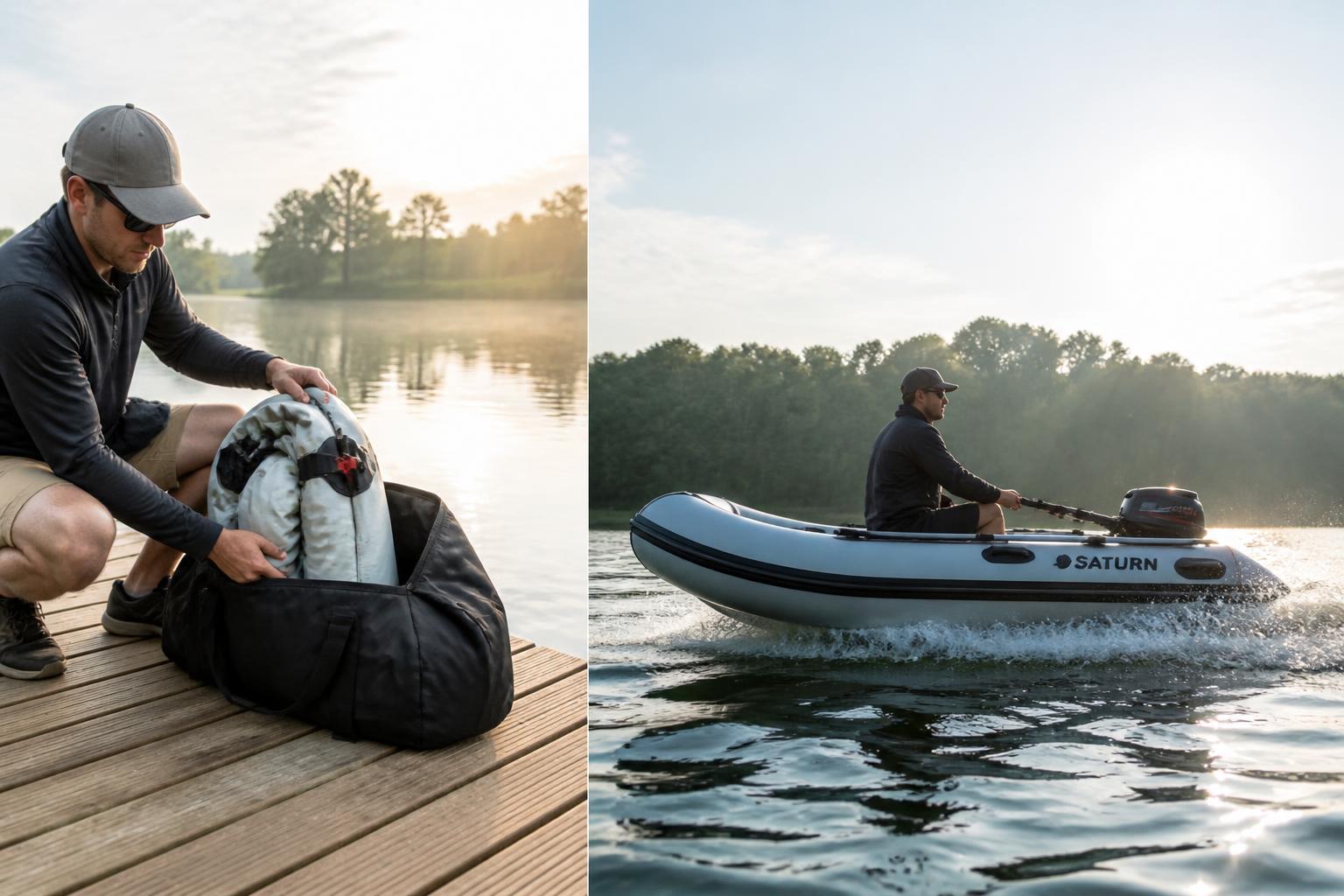
Inflatable Boats vs. Rigid Hull (RIB) Boats: Which Wins?
If you've spent any time shopping for a small boat, you've probably run into the same fork in the road we see customers hit every week: soft-floor inflatable or rigid hull inflatable boat (RIB)? Both hull types have loyal fans, and both can be the "right" choice depending on what you're actually doing with the boat. There's no universal winner here — but there is a right answer for your situation, and that's what we're going to sort out below.
We'll walk through durability, portability, on-water performance, and price, then wrap up with a straight comparison table you can use as a cheat sheet.
What Is a Soft-Floor Inflatable Boat?
A traditional inflatable boat has air chambers that make up the hull sides (the tubes) and, in most cases, an inflatable or removable slat floor instead of a solid fiberglass bottom. The whole boat rolls or folds down into a bag that one or two people can carry. These boats rely on air pressure in multiple separate chambers for both buoyancy and rigidity — no air chamber failure sinks the boat, since the others keep it afloat.
What Is a Rigid Hull Inflatable (RIB)?
A RIB keeps the same inflatable air tubes around the perimeter for stability and buoyancy, but bolts them to a solid hull — usually fiberglass or aluminum — instead of an inflatable floor. That rigid hull is what lets RIBs plane out at higher speeds, cut through chop more cleanly, and hold up to more aggressive use over the long haul. The trade-off is that a RIB doesn't pack down into a duffel bag; it stores more like a traditional boat, on a trailer or in a garage.
Durability: Where the Real Differences Show Up
This is usually the deciding factor for buyers who plan to use their boat hard — fishing guides, dive operators, tender duty on a yacht, or anyone launching off rocky or shelly beaches.
Soft-floor inflatables have come a long way. Quality boats use heavy-duty PVC or Hypalon-style fabrics with multiple air chambers, so a puncture in one tube doesn't ruin your day. But the floor and tubes are still fabric, and fabric can be cut, abraded, or punctured by sharp rocks, oyster beds, or careless dragging across a parking lot.
RIBs remove that weak point entirely. The rigid floor shrugs off abrasion that would chew through fabric, and the solid hull handles beaching on gravel or rocks far better. The tubes are still inflatable and can still be punctured, but you're not depending on an inflatable floor to keep your feet dry.
Portability and Storage
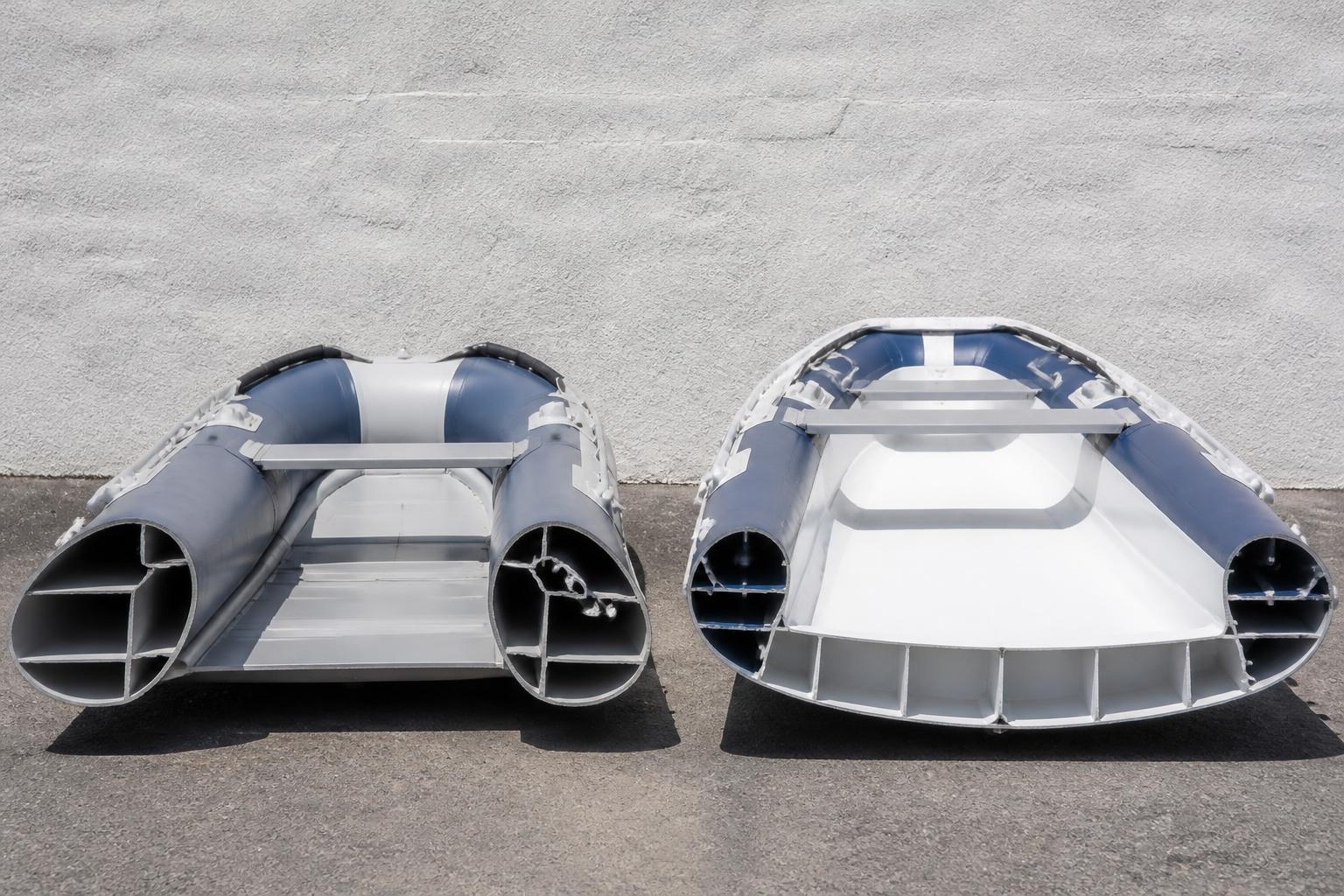
This is where soft-floor inflatables win outright, no debate. Deflate the tubes, roll up the floor, and the whole boat fits in a bag you can throw in a car trunk, a sailboat lazarette, or an airplane cargo hold. There's no trailer, no slip fee, no need for a garage. For apartment dwellers, sailors needing a dinghy, or anyone who wants a boat they can store in a closet nine months of the year, this is the entire appeal.
RIBs need real storage. Even smaller RIBs generally sit on a trailer or require davits on a larger vessel. You're looking at trailer storage fees, towing logistics, and a boat that's far less forgiving if you don't have a dedicated place to keep it.
Performance on the Water
Rigid hulls plane faster, track straighter, and handle chop with less pounding because the solid bottom doesn't flex the way an inflatable floor does. If you're running a bigger outboard, doing open-water crossings, or want a boat that feels more like a "real" powerboat, a RIB's rigid hull gives you that.
That said, modern soft-floor inflatables with high-pressure air floors (the kind rated to 2-3 PSI instead of a soft slat floor) have closed a lot of that performance gap. They're not going to out-handle a RIB in rough water, but for calm lakes, slow rivers, and recreational use, the difference is far less dramatic than it used to be.
Price: The Other Big Factor
Soft-floor inflatables are almost always less expensive than a comparably sized RIB, both because the materials and construction are simpler and because there's no rigid hull mold or fiberglass work involved. For buyers on a budget, or anyone who wants a capable boat without a five-figure price tag, that matters.
RIBs cost more up front, largely because of the rigid hull construction, but they also tend to hold resale value better and last longer under heavy use, which can even out the math over a 10+ year ownership period.
Side-by-Side Comparison
| Factor | Soft-Floor Inflatable | Rigid Hull (RIB) |
|---|---|---|
| Durability vs. abrasion/rocks | Good, but floor and tubes are fabric | Excellent, solid hull resists abrasion |
| Portability | Packs into a bag, no trailer needed | Needs a trailer or dedicated storage |
| Top speed / rough water handling | Good for calm water; flex limits top speed | Better planing, handles chop more cleanly |
| Weight | Lighter, easier for one or two people to carry | Heavier, typically requires a trailer |
| Upfront price | Lower | Higher |
| Storage requirements | Garage, closet, trunk, sailboat locker | Trailer, marina slip, or dedicated space |
| Best for | Casual recreation, fishing, travel, tenders for sailboats | Frequent heavy use, rough water, higher speed needs |
Protecting Your Investment Either Way
Whichever hull type you land on, the hull itself is the single most expensive part of the boat to repair or replace, so it's worth thinking about long-term coverage up front rather than after something goes wrong. If you go with a Saturn inflatable from our lineup, every boat already comes with a standard 3-year hull warranty against manufacturer defects. For a little extra peace of mind, we also offer a 2 Years Extended Warranty that stretches that coverage out to a full 5 years from your purchase date, for a flat $99.

It only covers the hull (not accessories), doesn't cover normal wear and tear or damage, and has to be purchased within 6 months of delivery — but for boats that will spend years getting beached, loaded, and dragged around, it's a cheap way to protect the biggest-ticket item on the boat.
So Which One Actually Wins?
Honestly, neither wins outright — it depends on how and where you'll use the boat. If you need something you can store in a closet, throw in a car trunk, or carry down to a dock by hand, a soft-floor inflatable is the clear choice, and it'll cost less to boot. If you're running the boat hard, beaching it on rough shorelines regularly, chasing higher speeds, or want something that'll hold up to years of commercial-style use, the rigid hull's extra durability and performance earn their higher price tag.
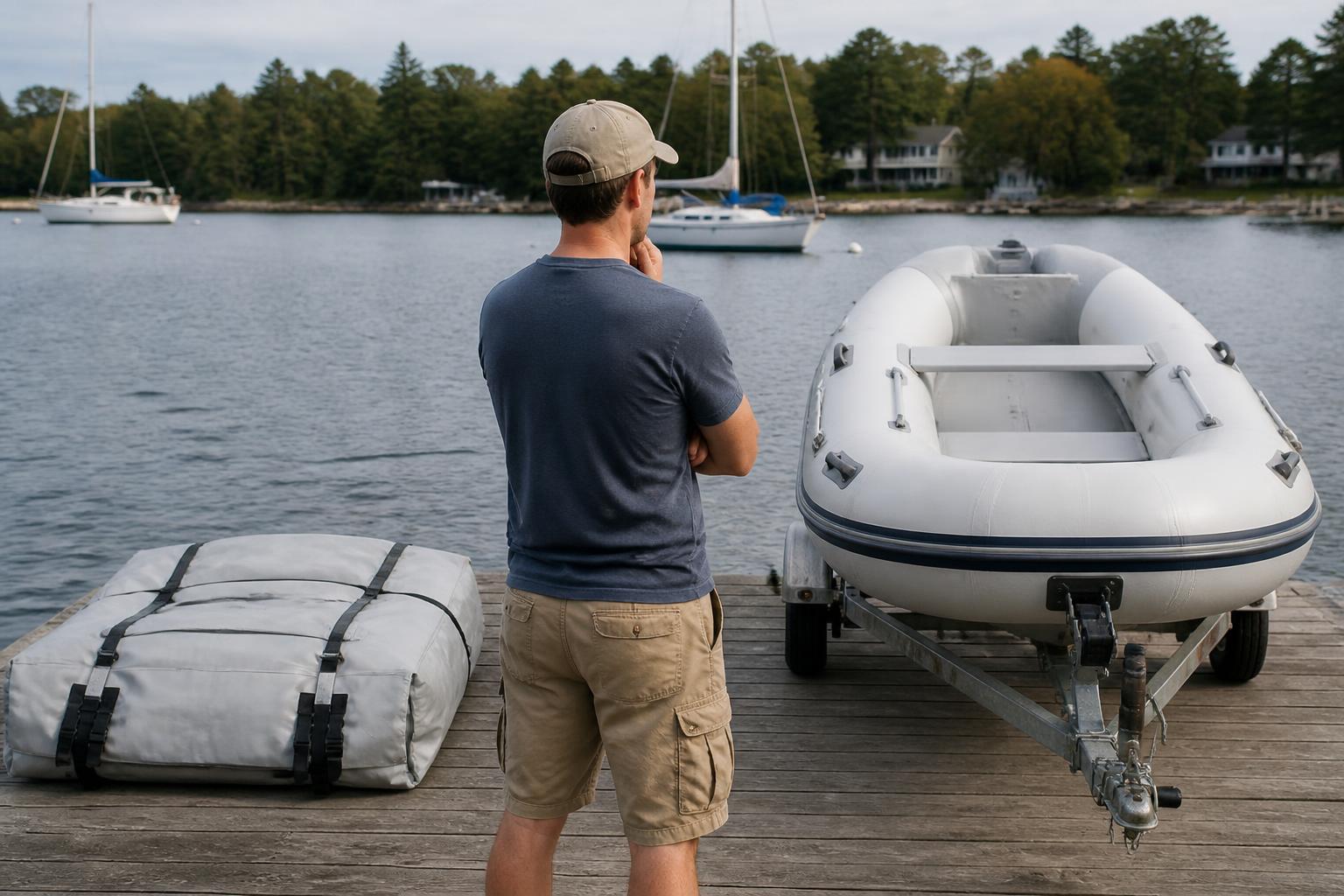
Think honestly about where you'll launch, how often you'll use the boat, and where you'll store it between trips. Match the hull type to those answers, not to whichever boat looks fastest in a brochure photo, and you'll end up with a boat you actually use for years instead of one that sits unused because it doesn't fit your life.