

Top rated
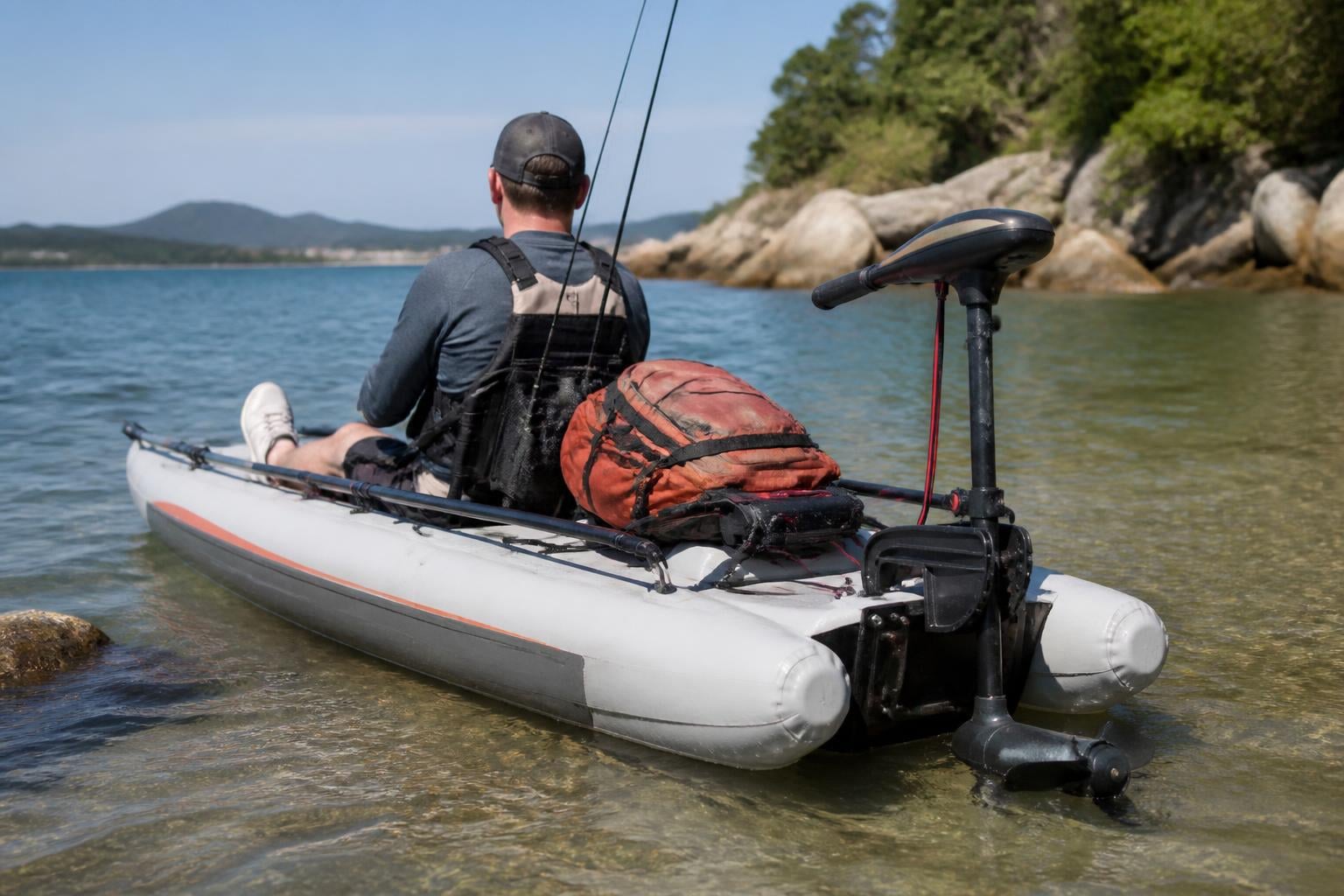
Best Electric Trolling Motors for Inflatable Boats and Kayaks: A Buyer's Guide
If you've ever paddled an inflatable kayak against a stiff headwind, or watched your buddy's gas outboard leave a sheen on the water while you're trying to sneak up on a school of bass, you already know why electric propulsion has taken over the small-boat world. The tricky part isn't deciding whether you want an electric motor — it's figuring out which one actually fits your boat, your battery setup, and the way you use the water. A motor that's perfect on an 11-foot inflatable dinghy will be dead weight on a paddle board, and vice versa. This guide breaks down how to match the right electric trolling or fin motor to your inflatable boat, kayak, or SUP, based on real specs instead of marketing fluff.
Two Very Different Kinds of Electric Motors
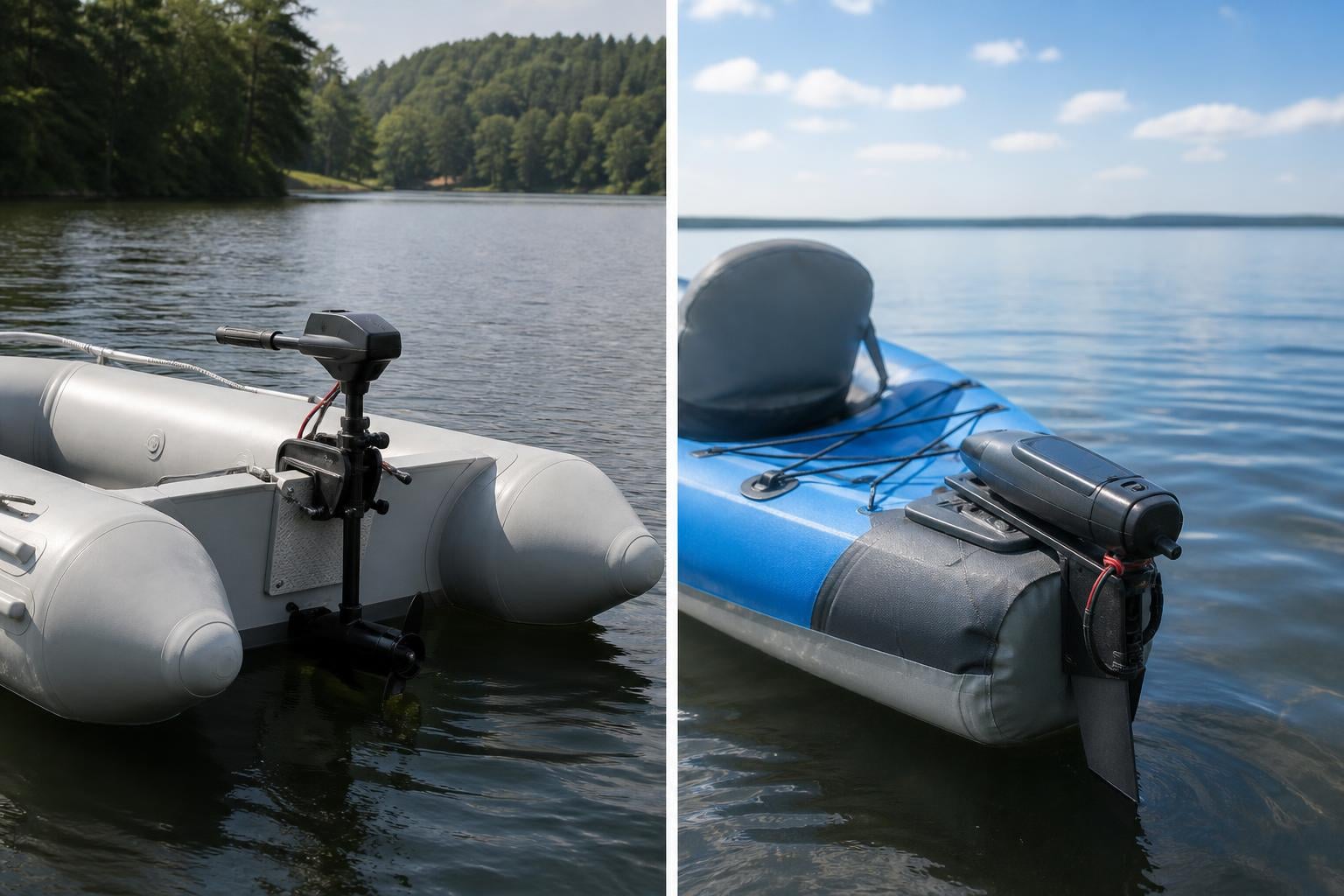
Before comparing specific products, it helps to understand that "electric motor for a small boat" actually covers two distinct categories of hardware, and they're not interchangeable:
1. Transom-Mount Trolling Motors
These clamp onto a hard transom or a reinforced inflatable transom bracket, just like a mini outboard. They use a prop, a shaft, and a tiller handle, and they're built for boats that have some structure to bolt onto — inflatable dinghies, RIBs, jon boats, and small skiffs.
2. Fin Drive Motors
Fin motors are a newer design meant for boats and boards that don't have a proper transom — inflatable kayaks, SUPs, and packrafts. Instead of a prop on a shaft, they use a fin-shaped pod that mounts to the hull or a slide-track adapter, and they're controlled with a wireless wrist remote instead of a tiller.
Trying to force a transom motor onto a soft-sided kayak (or a fin motor onto a boat that needs real thrust for 3-4 passengers) is the single most common mistake buyers make. Match the motor type to the hull type first, then worry about power.
Matching Motor to Boat: What Actually Matters
Once you know which category you need, three things determine which specific motor makes sense:
- Boat/board weight capacity and size. A 15'6" SUP glides very differently than an 11-foot inflatable dinghy loaded with two adults and a cooler.
- How much thrust you actually need. Trolling for bass in a calm cove needs far less push than crossing a wind-exposed bay with passengers and gear.
- Portability. If you're hauling your setup on a bike rack, in a trunk, or backpacking to a put-in, motor weight and fold-down size matter as much as horsepower.
If You Have an Inflatable Boat with a Transom
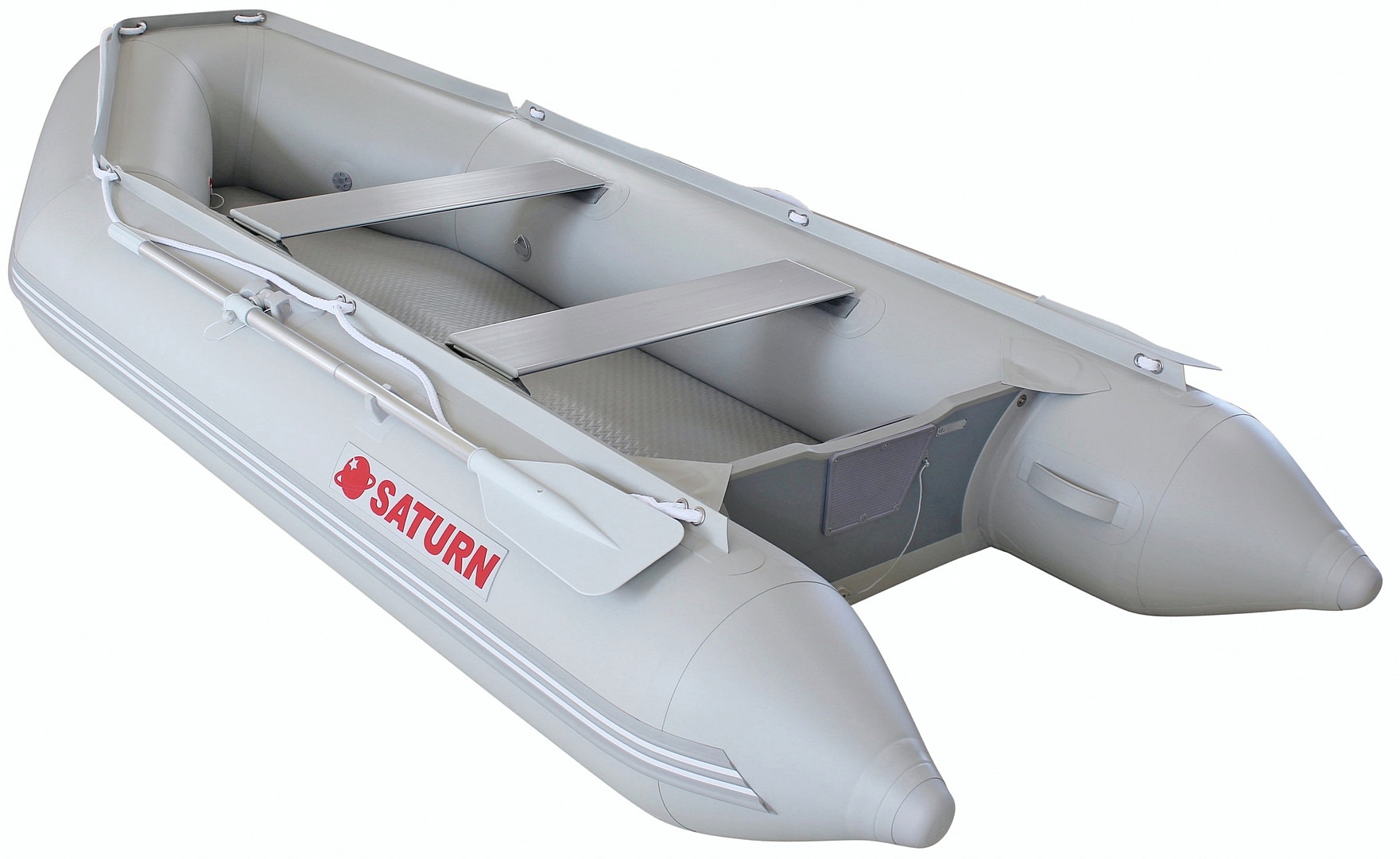
For dinghies like the 11' Inflatable Dinghy Boat SD330, you want a transom-mount trolling motor. The SD330 itself is rated for up to 15 HP (short shaft) and seats 4-5 people, but most owners running electric-only setups pair it with a 1HP-class 12V trolling motor for quiet, low-maintenance cruising around anchorages, tenders duty to a yacht, or fishing in no-wake zones.
This is where the 1HP Electric Trolling Motor 12V earns its keep. It's rated at 600W (12V, 50A max draw) and weighs just 14 lbs — noticeably lighter than most 12V trolling motors in this class, which typically run 20+ lbs. On a boat like the SD330, that weight difference matters when you're the one lugging the motor from the car to the dock.
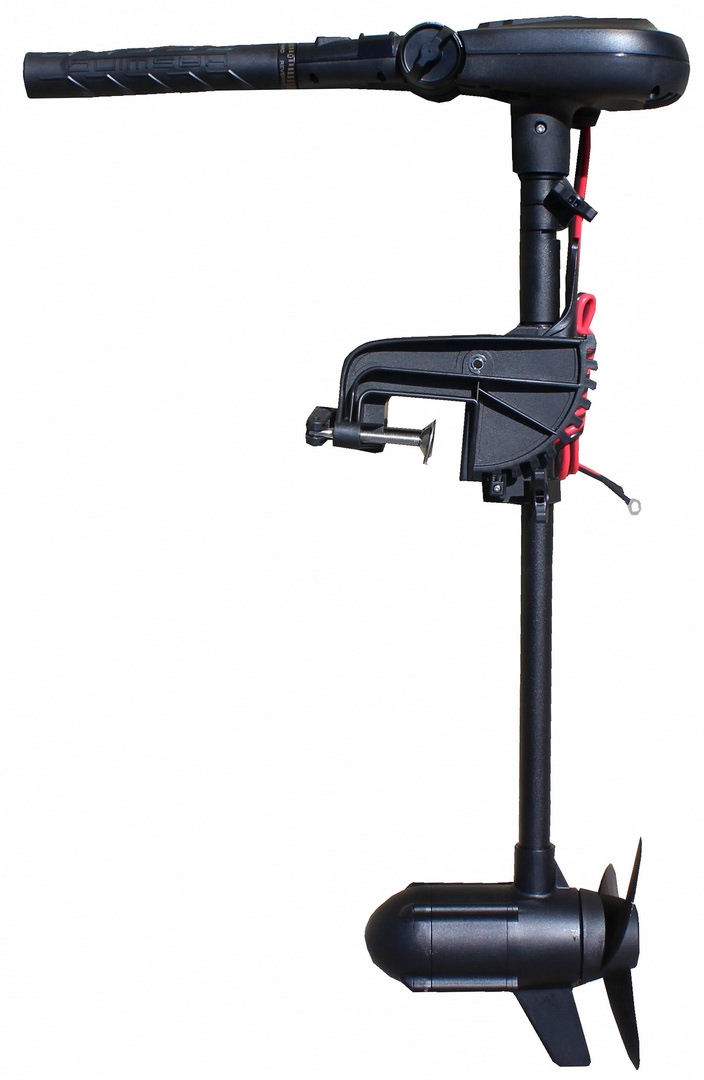
A few details that matter in practice:
- Folds down to 39" x 12" x 6" with a 23" motor head — about 9 inches shorter than the typical 32" head found on comparable trolling motors, which makes it far easier to stow inside a deflated boat bag.
- 10-position tilting throttle handle that tilts up to 45 degrees or lies flat against the shaft, so you're not fighting an awkward fixed tiller when the motor is stowed or when you're steering from a low inflatable seat.
- Built-in battery level reader, so you're not guessing how much runtime you have left halfway across the lake.
- Adjustable depth collar to fine-tune how deep the prop sits — useful on an inflatable where your seating position sits higher off the water than on a hard-hull boat.
It carries a 1-year warranty and ships at 17 lbs in a 39 x 11 x 7 box — small enough to fit in most car trunks alongside a folded boat.
If You Have a Kayak, SUP, or Inflatable Without a Transom
Inflatable kayaks and paddle boards generally don't have a hard mounting point strong enough for a clamp-on trolling motor, and even if they did, the extra weight and the prop's draft would be awkward on a low-freeboard hull. This is exactly the gap the Electric Fin Motor for Kayaks and SUPs V2 is built to fill.
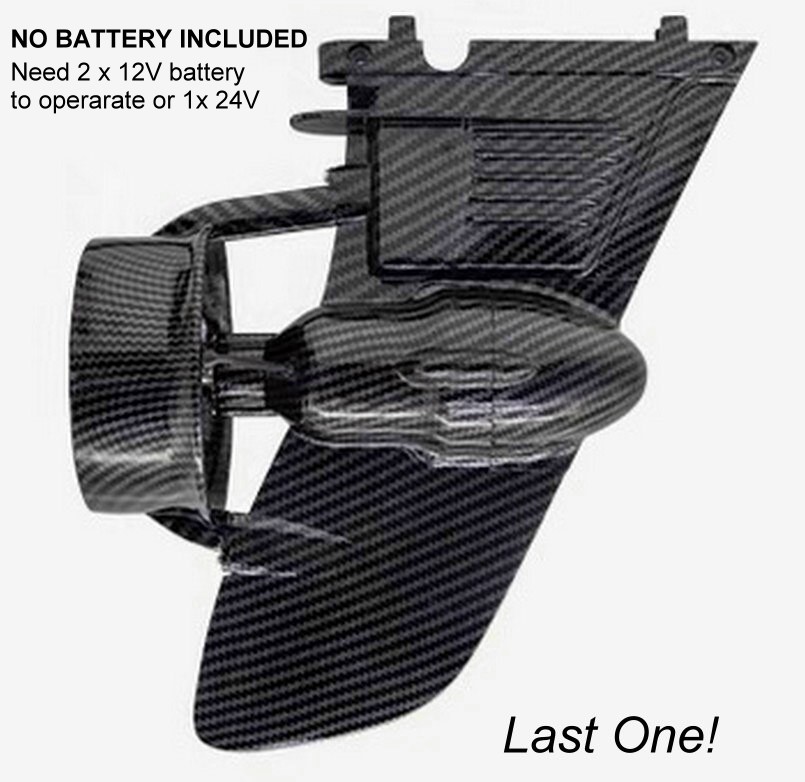
Instead of a shaft-and-prop setup, it uses a brushless motor built into a low-profile fin, controlled from a wrist-worn wireless remote — no tiller, no cables running to your hands. The V2 update added a quick snap power connection, a waterproof charging port, and a remote with user-replaceable batteries, which fixes the most common complaints owners had about earlier fin motors (fiddly connectors and remotes you had to send back just to change batteries).
It comes with two mounting adapters, so it's set up to install on multiple inflatable SUP and kayak hull styles rather than a single fixed mount point. If you already own a Saturn inflatable kayak, SUP, or skiff, it's worth checking current promotions — the fin has been offered as a discounted add-on for qualifying boats.
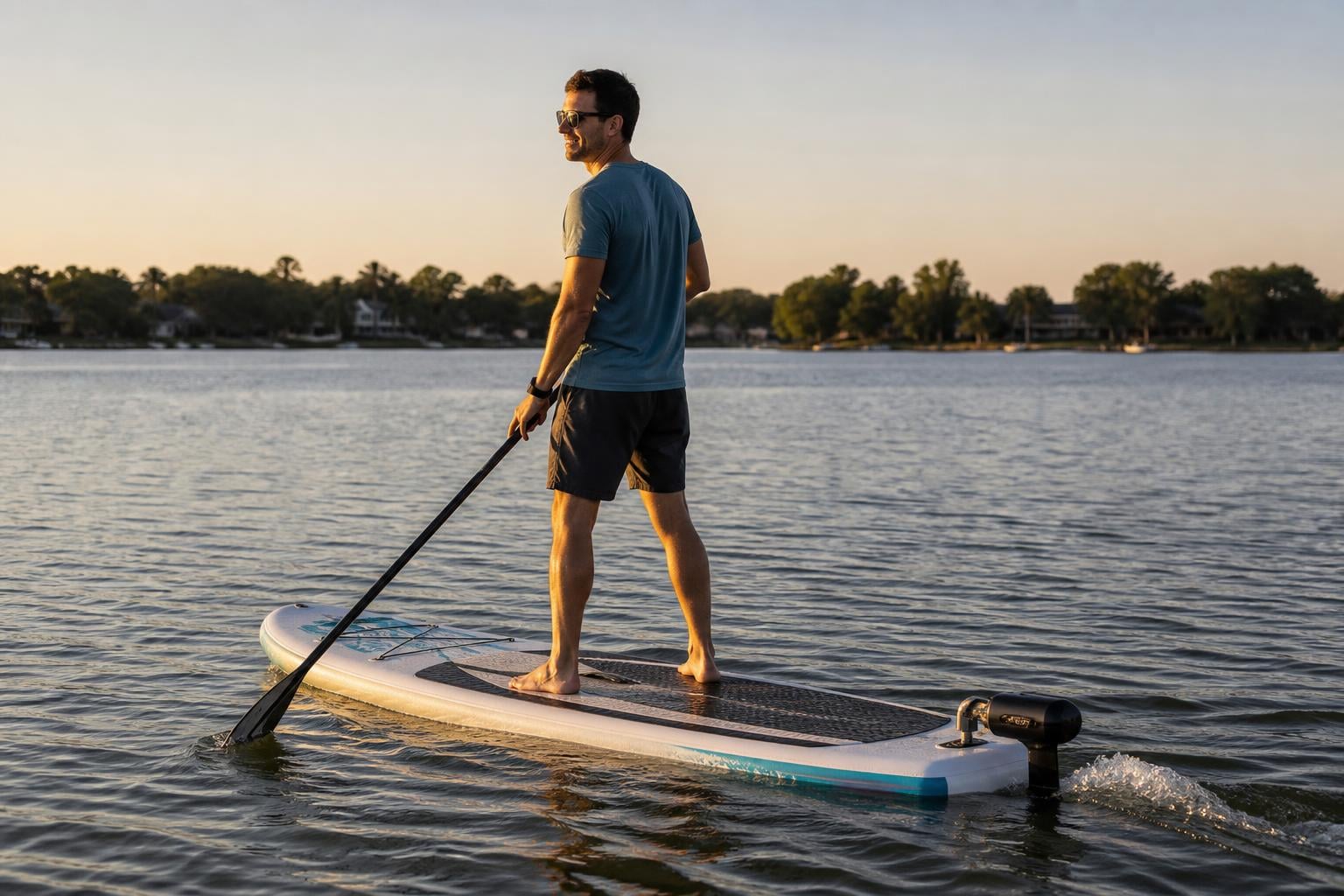
Where this shines: paddle-assist. You don't have to choose between paddling and motoring — plenty of owners paddle as usual and only click on the fin when they hit a headwind, need to cover distance quickly, or are working their way back after a long fishing session with tired arms.
Side-by-Side Comparison
| Feature | 1HP Electric Trolling Motor 12V | Electric Fin Motor V2 |
|---|---|---|
| Best for | Inflatable boats/dinghies with a transom | Kayaks, SUPs, boards without a transom |
| Price | $269 | $289 (as low as $200 as an add-on with qualifying Saturn boats) |
| Power | 1 HP, 12V, 600W rated, 50A max draw | Brushless motor, remote-controlled speed |
| Weight | 14 lbs (motor only) | Lightweight, designed to be hand-carried |
| Controls | Tiller handle, 10-position tilt, smooth variable speed | Wireless wrist remote |
| Mounting | Clamps to transom bracket | Fin mount with 2 included adapters |
| Extras | Battery level reader, adjustable depth collar, composite shaft | Quick-snap power connection, waterproof charging port, replaceable remote batteries |
| Folded size | 39" x 12" x 6" | Compact, low-profile fin design |
| Warranty | 1 year | Manufacturer warranty (check current listing) |
Battery and Runtime Considerations
Both motors are 12V systems, but how long they run depends entirely on your battery, not just the motor. The 1HP trolling motor's 600W rating with 50A max draw means at full throttle you're pulling a serious chunk of a standard deep-cycle marine battery's capacity, so it's worth pairing it with a battery rated at least 50-100Ah if you want more than an hour or two of mixed-speed cruising. The built-in battery level reader takes the guesswork out of monitoring this while you're out — glance down, know where you stand, head back before you're stuck paddling home.
For the fin motor, runtime is also battery-dependent, but because it's usually run at lower average draw (especially when used as paddle-assist rather than constant full-throttle propulsion), most users report multi-hour sessions on a single charge. If you're planning all-day fishing trips, consider carrying a spare battery for either system rather than assuming one charge covers a full day.
Quick Decision Guide
- You own an inflatable dinghy, RIB, or small skiff with a transom (like the SD330): go with the 1HP Electric Trolling Motor 12V