

Top rated
Best Marine Batteries for Trolling Motors & Electric Fins (2026)
If you've ever had your trolling motor or electric fin die halfway back to the launch, you already know the battery matters more than the motor spec sheet. Paddlers and small-boat owners tend to obsess over thrust, speed, and motor wattage, then grab whatever battery is cheapest or already in the garage. That's backwards. The battery is what decides how long you're actually on the water, how much weight you're hauling, and how often you're replacing the thing.
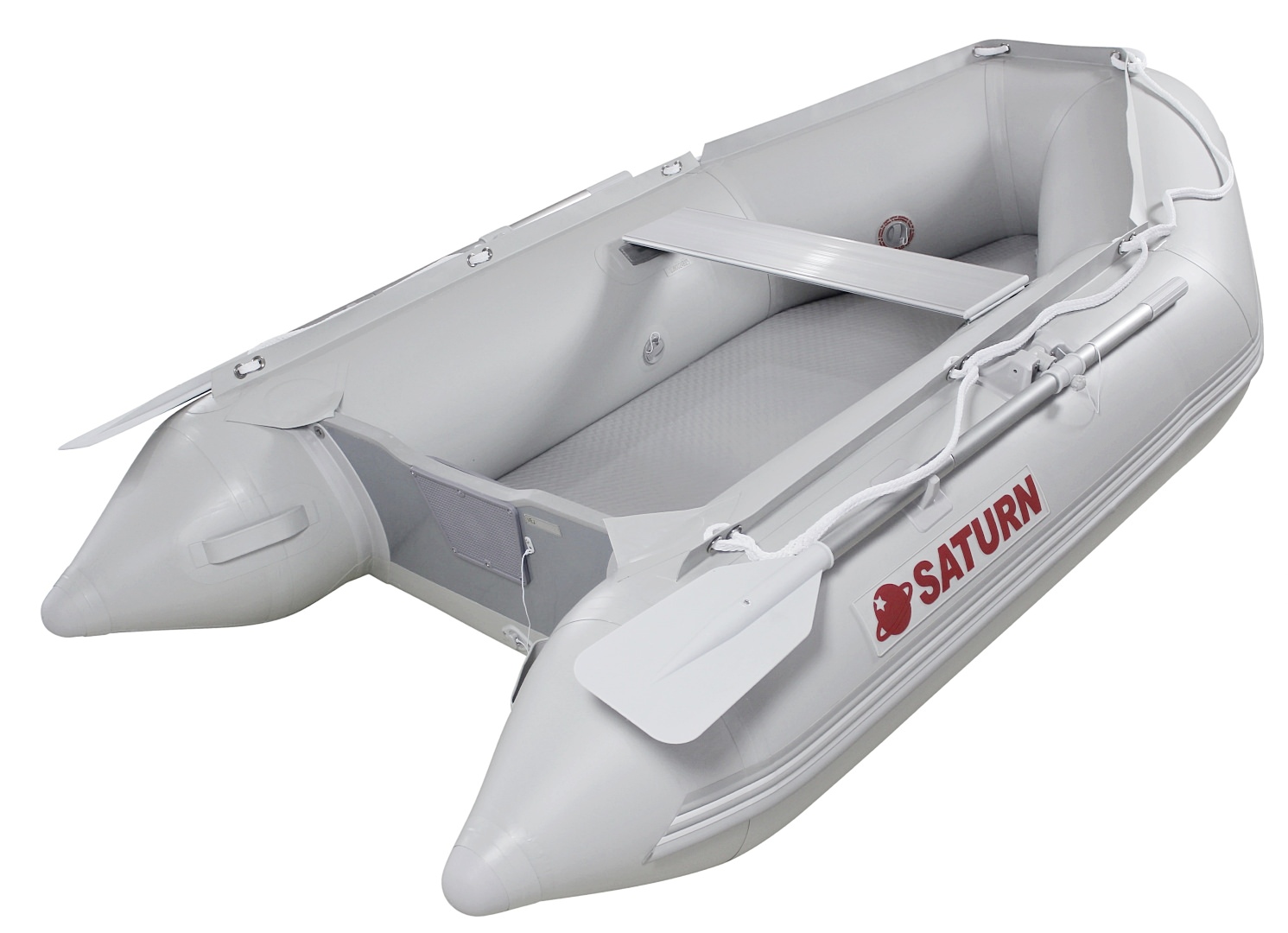
This guide breaks down deep-cycle lead-acid vs. lithium batteries, walks through the amp-hour and watt-hour math so you can actually calculate your runtime instead of guessing, and matches those numbers to real electric fin motors we carry — the K4C Remote-Steering eFin and the K4S Sport Electric Fin Motor — plus how to pair either one with an inflatable boat like the Saturn SD260 dinghy.
Why Battery Choice Matters More Than Motor Choice
Every electric fin or trolling motor is rated in watts (power draw), but what determines your day on the water is watt-hours (total energy stored). A 1500W motor sounds impressive, but if your battery only holds 300Wh, you're looking at 12 minutes of full-throttle runtime before you're paddling home. Conversely, a modest 400W fin paired with a well-sized battery can keep you moving for hours. Sizing the battery correctly is the single biggest factor in whether your electric setup feels like freedom or feels like a liability.
Deep-Cycle Lead-Acid vs. Lithium: The Real Tradeoffs
There are two realistic battery categories for trolling motors and electric fins: sealed deep-cycle lead-acid (AGM/Gel) and lithium iron phosphate (LiFePO4). Here's how they actually compare in practice:
Weight
This is the big one for kayaks, SUPs, and small inflatables where every pound counts toward capacity and handling. A 12V 35Ah AGM battery typically weighs around 22-24 lbs. A lithium battery of similar capacity often comes in at roughly a third of that weight. On a kayak or the K4C eFin's 1180g motor unit, that weight difference is the difference between a stable boat and a sluggish one.
Usable Capacity (Depth of Discharge)
A lead-acid battery's rated capacity isn't all usable — regularly discharging it past 50% shortens its life dramatically. Lithium batteries, by contrast, can typically be run down to 80-100% of rated capacity without the same cycle-life penalty. In practical terms, that means a lithium battery rated at the same Ah as a lead-acid one will give you roughly double the real-world runtime before you need to recharge.
Cycle Life and Cost Over Time
Lead-acid deep-cycle batteries are cheaper upfront but generally rated for a few hundred discharge cycles. Lithium batteries cost more initially but are commonly rated for several thousand cycles, so the per-trip cost evens out — or favors lithium — if you're on the water often.
Charging Speed
Lithium packs generally accept a faster charge and don't suffer the same damage from partial or quick charges that lead-acid batteries do. This matters if you're squeezing in a charge between launches.
The Runtime Math: Amp-Hours, Watt-Hours, and What They Mean for You
Most electric fins and trolling motor batteries are labeled in one of two ways: amp-hours (Ah) at a given voltage, or total watt-hours (Wh). You need to convert everything to watt-hours to compare apples to apples, because that's the real measure of stored energy.
The formula is simple:
Watt-hours (Wh) = Volts (V) × Amp-hours (Ah)
And runtime is:
Runtime (hours) ≈ Battery Wh ÷ Motor Watts drawn
So a 12V battery rated at 35Ah stores roughly 420Wh (12 × 35). If your motor is drawing 100W at cruising speed, that battery theoretically gives you about 4.2 hours of runtime. In the real world you'll get a bit less due to discharge losses, temperature, and the fact that most batteries shouldn't be run to zero — but it gets you in the right ballpark before you buy.
Let's run this math against the actual fin motors we sell.
K4C Remote-Steering eFin: Doing the Math
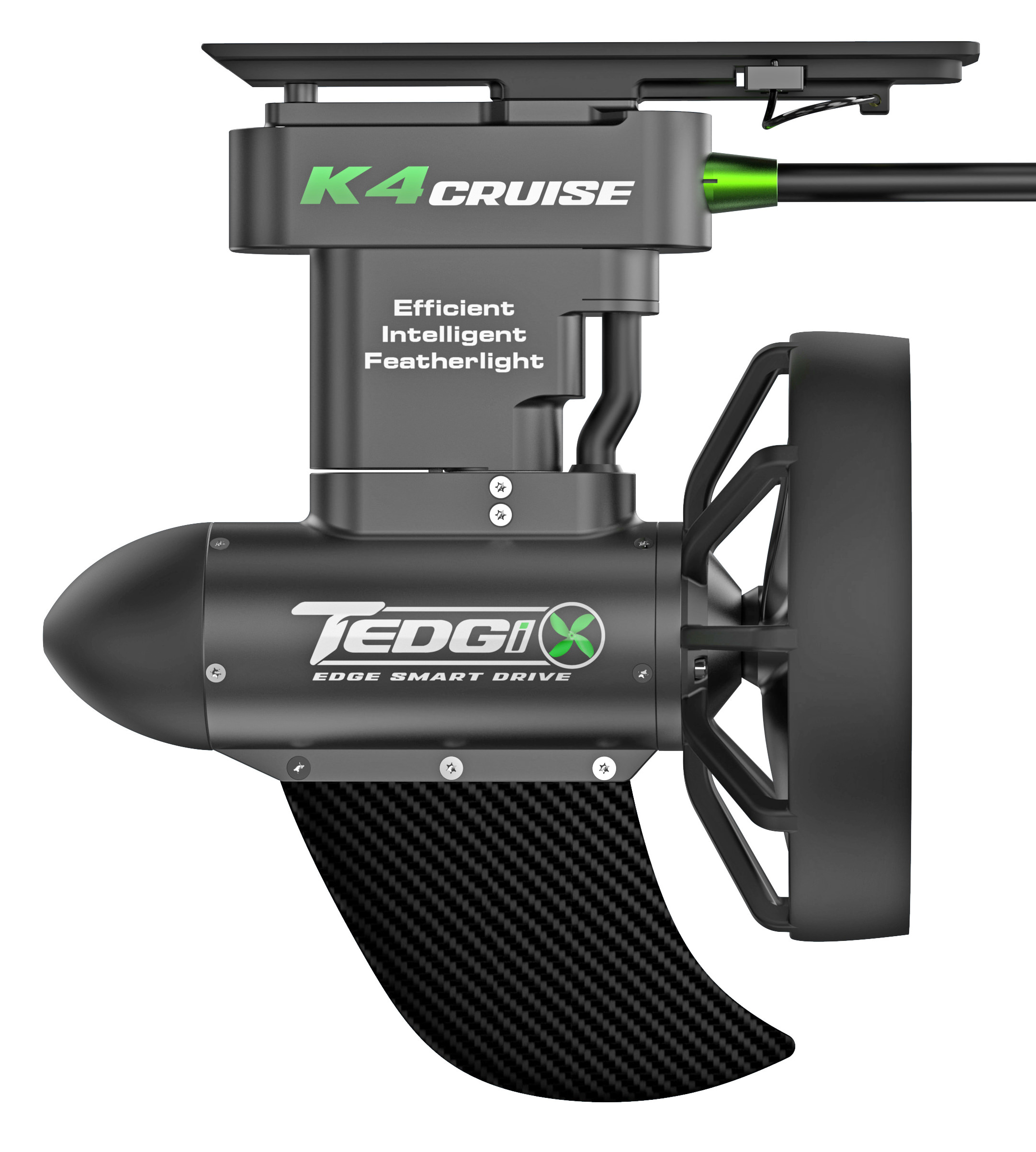
The K4C eFin ships with an integrated B4 waterproof lithium battery rated at 423Wh, driving a 400W brushless motor. At its efficient cruise setting of 100W (around 5-6 km/h), the math works out to roughly 423 ÷ 100 ≈ 4.2 hours — which lines up closely with the manufacturer's stated 5-hour slow-speed runtime. At full power (around 400W), you get 423 ÷ 400 ≈ 1 hour, again close to the stated 1.5-hour full-speed runtime once you account for the battery not drawing a flat 400W the entire time. This is a good example of why matching a battery to a motor's actual power curve — not just its peak wattage — gives you realistic numbers.
K4S Sport Electric Fin: A Different Power Class
The K4S Sport is a different animal — a 1500W brushless motor pushing up to 21.5 kg (47 lbs) of thrust and speeds up to 9 mph. That's nearly 4x the power draw of the K4C at full throttle, so it needs a substantially larger energy reserve to get comparable runtime. If you paired it with a 420Wh battery (roughly what a 12V 35Ah deep-cycle battery holds), full-power runtime would only be around 420 ÷ 1500 ≈ 0.28 hours (about 17 minutes) — fine for short sprints to a fishing spot, but not for an all-day outing at full throttle. Running it at a lower cruise wattage (say 300-400W) stretches that out considerably, closer to an hour or more, which is the more realistic way most people actually run it.
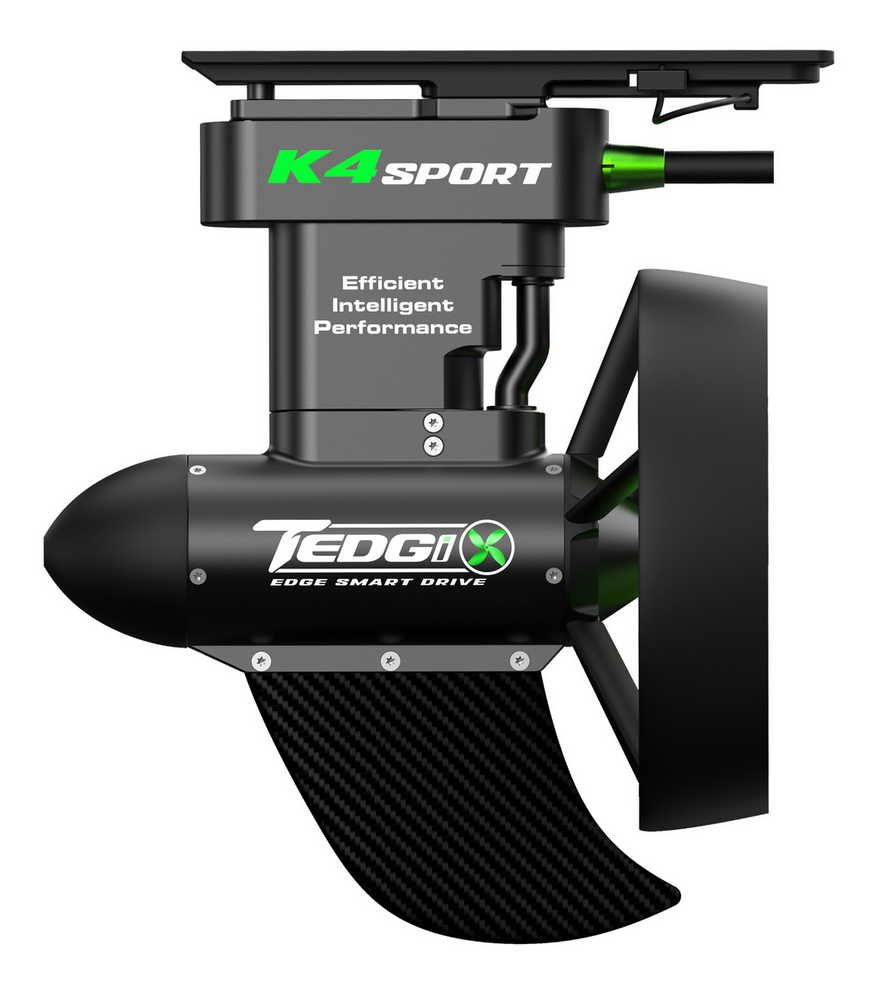
Because the K4S Sport draws significantly more current than the K4C, pairing it with a 24V battery setup instead of 12V is worth considering — at 1500W, a 12V system pulls around 125 amps, while a 24V system cuts that to roughly 62.5 amps, which is easier on wiring, connectors, and the battery itself. This is exactly the kind of setup our Battery Box is built for: it's configured for 12V or 24V batteries, ships with a charger for 24V setups, and holds either a single 12V 35Ah battery or two 12V 12Ah batteries side by side (interior dimensions 9.5" L x 6.5" W x 5" D).

Comparing the Options
Here's how the two fin motors and the battery housing stack up when you line up the specs that actually affect range and usability:
| Product | Motor Power | Battery | Claimed Runtime | Weight | Top Speed |
|---|---|---|---|---|---|
| K4C eFin | 400W brushless | Integrated B4 423Wh lithium (included) | ~5 hrs slow / ~1.5 hrs full power | 1180 g (fin unit) | 5 mph (9.6 km/h) |
| K4S Sport | 1500W brushless | External 12V/24V battery (not included) | Varies by battery size — see math above | 3.9 lbs (1.78 kg) motor only | Up to 9 mph (14.5 km/h) |
| Battery Box | N/A (housing/charger) | Holds 1x12V 35Ah or 2x12V 12Ah (not included) | Depends on battery installed | Dry box, foam-lined, charger for 24V included | N/A |
Which Setup Fits Your Boat?
If you're running a kayak, SUP, or Saturn inflatable kayak and want a simple, self-contained setup with no separate battery to manage, the K4C eFin is the straightforward choice — its 9-inch quick-release fin mount installs in seconds with no tools, and the battery is already matched to the motor, so you don't have to do any of this math yourself.
If you want more thrust — enough to push a small inflatable boat, fight current, or cover longer distances faster — the K4S Sport is the better fit, but budget for an external battery. Pairing it with the Battery Box and a 12V 35Ah (or larger) lithium battery gives you a protected, portable power source you can swap or recharge independently of the motor.
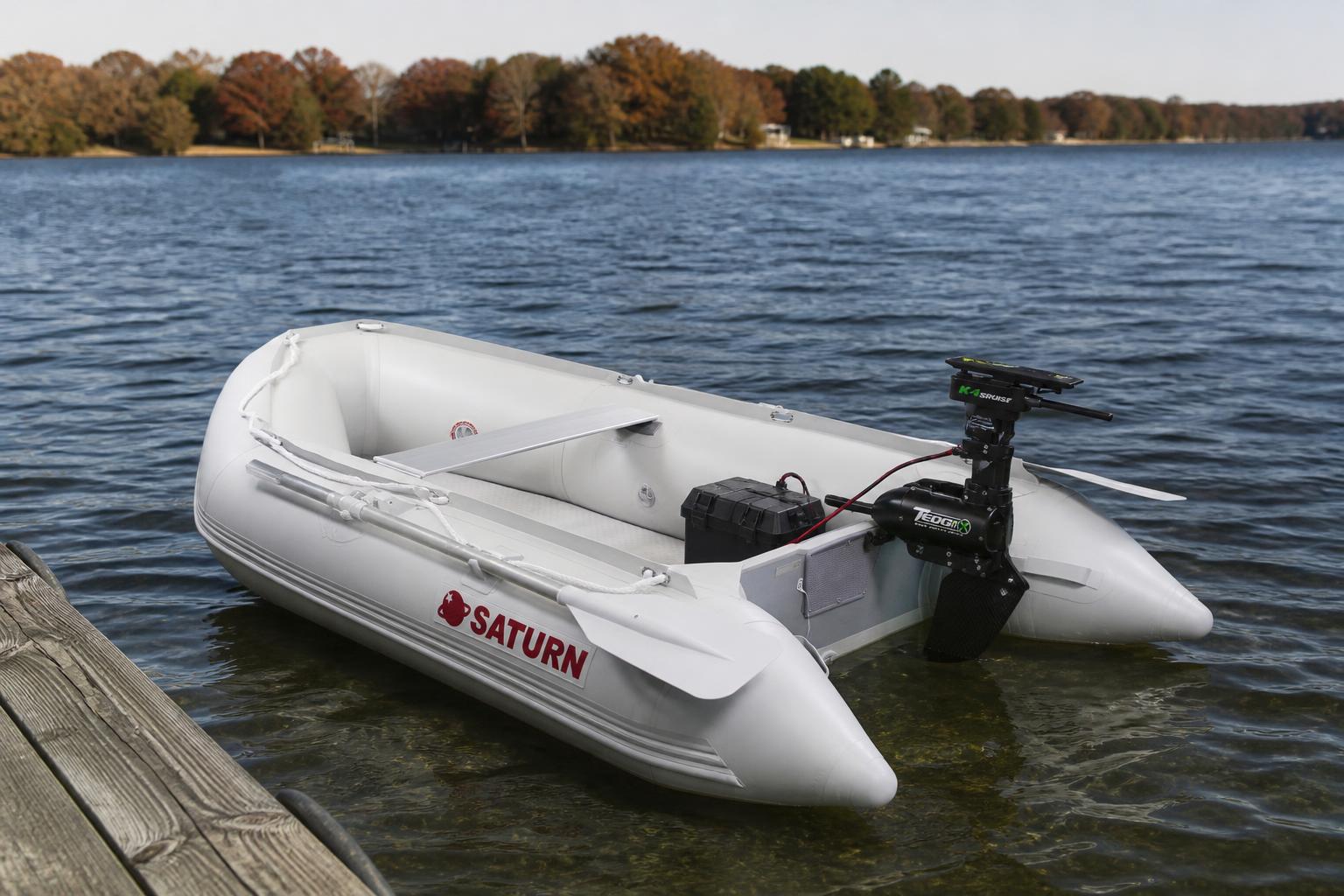
This combination also makes sense on a small hard-sided or inflatable boat rather than just a kayak. The Saturn SD260 dinghy, for instance, is rated for up to an 8 HP short-shaft outboard and 3 passengers, with a drop-stitch air floor rated to 9 psi for a rigid deck. While it's built primarily around a gas outboard, its stable, roomy 8.6' hull and fiberglass-covered transom make it a practical platform if you want to experiment with electric propulsion for quiet, low-maintenance short trips — just be realistic about matching battery capacity to the loads involved, the same way you would on a kayak.
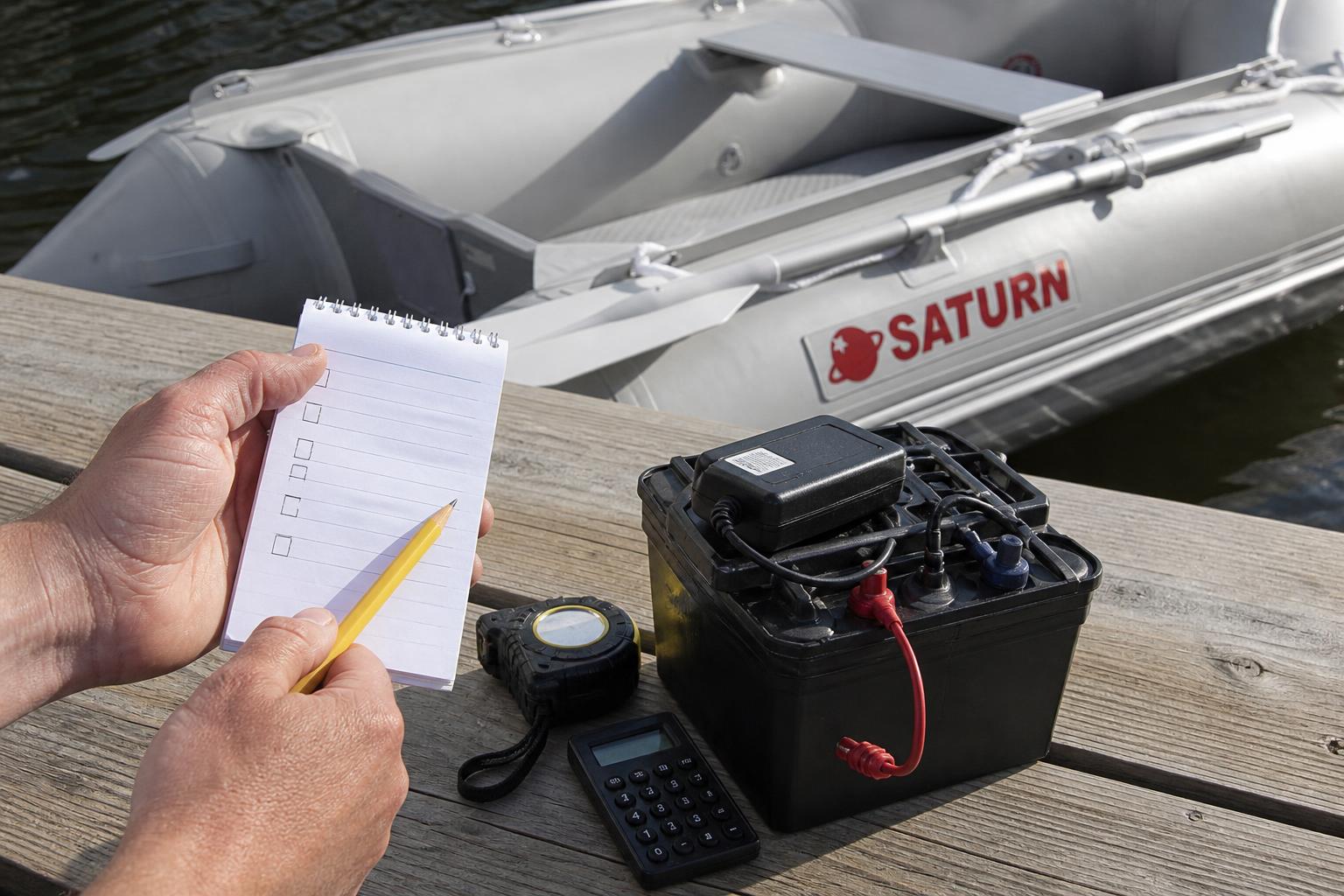
A Practical Sizing Checklist
- Know your motor's actual watt draw at cruise speed, not just its peak rating — cruise watts are what determine real-world runtime.
- Convert any battery's Ah rating to Wh (V × Ah) before comparing it to another battery or to a motor's power draw.
- Divide Wh by your typical cruising watts to get a realistic runtime estimate, then subtract 10-20% as a safety margin — especially on lead-acid batteries where you shouldn't discharge past 50%.
- Weigh the lithium premium against your boat's capacity. On a kayak or lightweight inflatable, shaving 10-15 lbs off your battery weight can matter more than saving money upfront.
- Match voltage to power draw. Motors under 500W generally run fine on 12V; motors in the 1000W+ range (like the K4S Sport) benefit from 24V to keep current and heat manageable.
- Protect the battery. A dedicated housing like the Battery Box keeps connections dry and batteries secured instead of rattling around loose in a hull.
Bottom Line
There's no single "best" battery — there's only the right battery for your motor's power draw and your boat's weight budget. If you want simplicity, the K4C eFin's built-in 423Wh lithium pack removes the guesswork entirely. If you need more thrust and speed, the K4S Sport paired with a properly sized external battery in a Battery Box gets you there — just run the watt-hour math first so you're not stranded halfway through your trip.